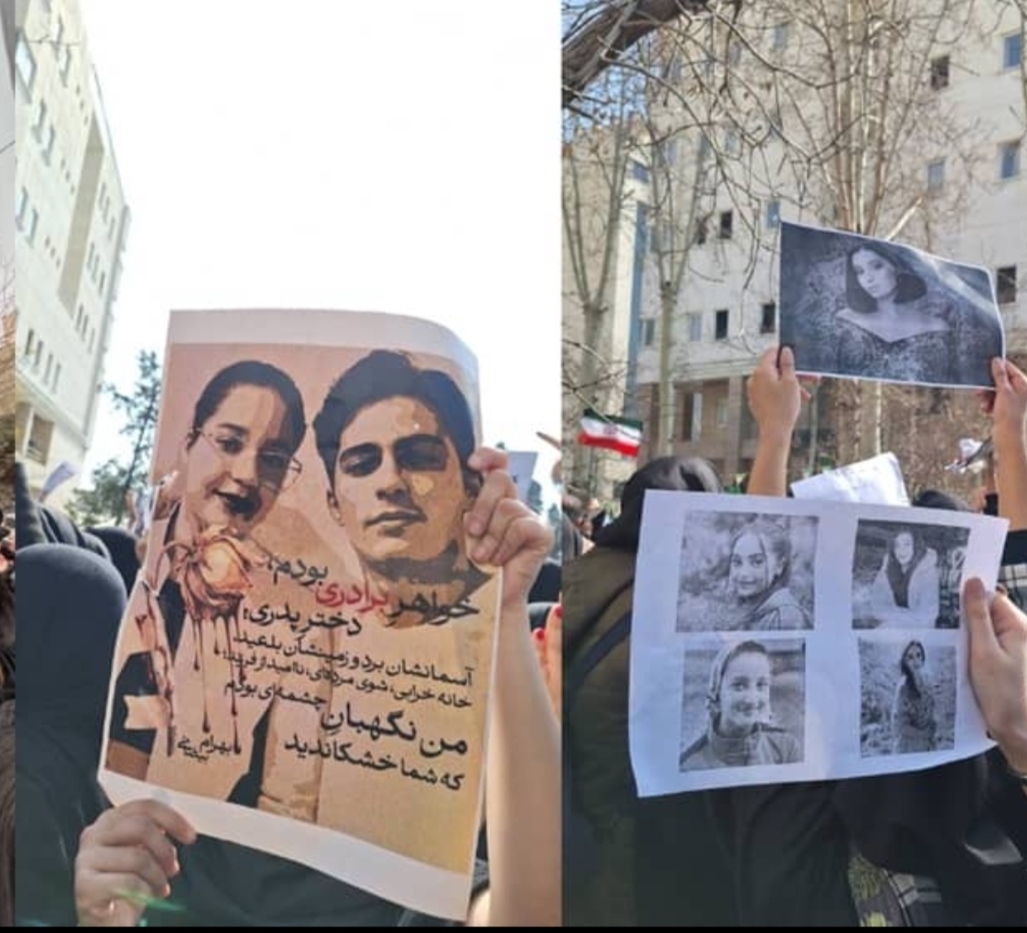
Iran is a political entity in which the ethno-confessional dimension is essential. The millennia-old tradition of the Persian Empire was based on tolerance toward all minorities. The most powerful Persian emperor, Darius I, described himself as “the king of the land of all ethnicities.” This phrase is engraved on his tomb in Susa (Shush), in 486 BC. This tradition of tolerance was broken in 1928 in favor of a hyper-centralized system of repression of minorities.
This rupture was driven by the Pahlavi shah dynasty and later, in 1979, by the Islamic Republic of Iran, which overthrew the shah’s regime and established an authoritarian theocracy based on Shiite Islam, the state religion. The country is in fact ruled by the Supreme Leader, a proclaimed descendant of the Prophet, chosen by a council of mullahs. The armed wing of the regime is made up of the “Guardians of the Revolution,” a true morality police, particularly targeting women who refuse to wear the veil. The ethnic minorities in the peripheral regions are the primary targets of severe repression. These Guards, the backbone of the regime, number around 150,000 men and serve both as police and army, controlling a large part of the economy. Since 1979, they have carried out fierce repression: shootings, hangings, torture, and rape, particularly against women, young people, and ethnic minorities. The radical Shiite regime has waged a total cultural struggle against Sunni Islam and against the cultures of ethnic minorities, imposing a forced, radical Islamization. Even Persian identity is marginalized.
This is the main difference with the previous regime of the shah, which was rooted in the Persian tradition, even though it was a repressive dictatorship equipped with a political police force, the SAVAK, which tortured and killed. In the collective memory of Iranians, this remains very vivid. This is why the return of the Pahlavi monarchy, represented by the shah’s son who lives in the United States, does not constitute a consensual solution for Iranians. The Islamic Republic favored the “Persian center” to the detriment of the ethnic peripheries, which were left in deep poverty. This very strong central power theoretically relied on about 50% of the population, which is Persian. However, this “Persian center,” highly educated and cultured, has led a direct opposition, particularly through student and women’s movements. For decades, these protest movements have been crushed by repression and terror carried out by the Guardians of the Revolution. Can the situation change after the assassination of Supreme Leader Khamenei and the decapitation of the Pasdaran elites (the exact scale of which is not yet known)? It is difficult for a structured opposition to emerge from the center, weakened by years of repression.
Ethnic minorities, on the other hand,constitute truly active opposition forces. Their economic marginalization compared to the center—where they have often been regarded as “second-class citizens”—forms the structural driving force behind the unrest. These minorities, significant in number (around 50% of the population), are mainly four groups: the Azeris (25%), the Kurds (15%), the Baloch, and the Arabs. First, West Azerbaijan, populated by Turkic-speaking and Shiite Azeris, represents about 25% of Iran’s 90 million inhabitants. This region in northwestern Iran shares a mountainous border with the independent Republic of Azerbaijan. Azeris on both sides of the border maintain the historical hope of reunification, rooted in a pan-Turkic political logic: Baku, Tabriz, Ankara. However, the Iranian regime carries out very harsh repression against any expression of Azeri nationalism.
The Islamic authorities have been particularly wary of an Azeri uprising. Indeed, the demographic weight of the Azeris is considerable. This is why this minority is relatively better treated economically, even though its standard of living remains lower than that of the population of the Republic of Azerbaijan, which is rich in oil and gas. Azerbaijan is also a major geopolitical player, with the Caspian Sea and the border city of Astara, a true commercial hub on the northern axis of the Silk Road. The regime in Baku maintains complex relations with these minorities: it is close to the United States and Israel, allied with Ankara, and engages as an equal partner with Vladimir Putin’s Russia. The border with Iran has been a significant military issue for several years, particularly due to the presence of American and Israeli interests. Astara has thus become an important military center. Furthermore, peace negotiations with Armenia are very advanced. The neighboring Azerbaijani state practices a largely secularized Shiite Islam, in sharp contrast to that of Iran. Active women there generally do not wear the veil. Azerbaijan is thus becoming an attraction pole for the Azeris of Iran. There are claims of potential CIA and Mossad infiltration in this Iranian province. The Azeris of Iran are mainly engaged in a political and cultural struggle, not a military one, unlike the Kurds in the west and the Baloch in the southeast.
As for Iranian Kurdistan, located in the west of Iran, it has a strong military tradition of resistance, which is absent among the Azeris. Kurdish national consciousness was forged in the face of relentless repression. Despite this, armed opposition groups remain active and are also believed to receive external support. Iranian Kurdistan, like Iranian Azerbaijan, could provide political elites in the event of the collapse of central power.
Finally, the Baloch minority, somewhat distinct, is Sunni and represents about 2% of Iran’s population. It is the ethnic group most opposed to central authority. The Baloch have borne the heaviest burden in the face of the extremely brutal repression carried out by the Revolutionary Guards. However, despite the repression, these ethnic oppositions remain attached to millennia-old Persia. They are in favor of a return to a form of federal state reminiscent of the imperial tradition prior to the Pahlavi dynasty.
While waiting for the United States to explain how it envisions the future of Iran, this is the ethnic situation that the new ruling elites will face (whether the Pahlavis or movements opposing the Iranian theocracy), with the aim of preserving the unity of the oldest state entity in the world.