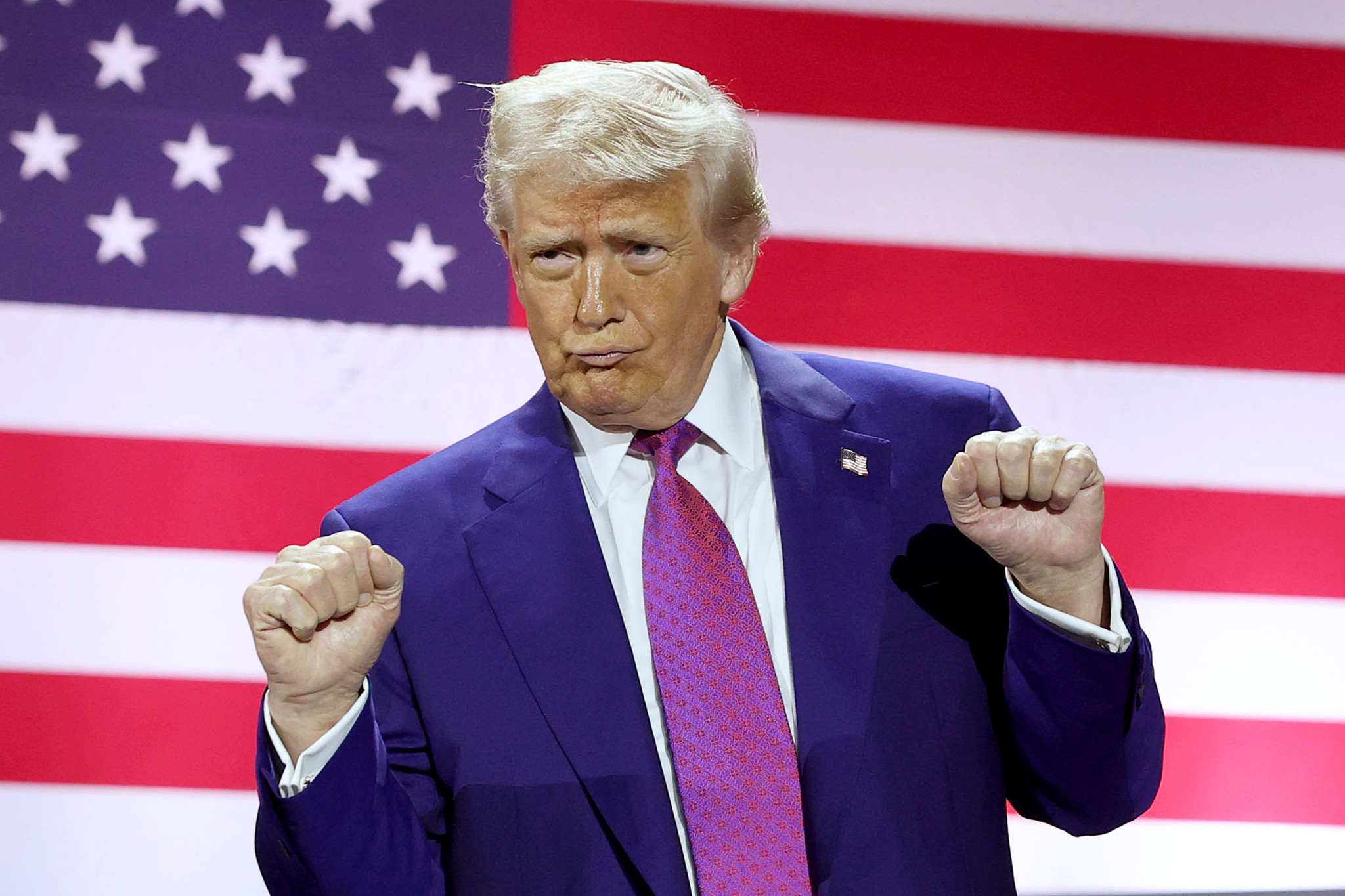
Now that the White House is occupied by a figure whom calling “questionable” would be an understatement, many are beginning to recognize a geopolitical fact that has eluded them for more than thirty years: European and American interests do not coincide. In reality, they never have. Just think of the underlying reasons for the American Revolution, through which the thirteen colonies emancipated themselves from the English motherland in 1776—exactly two hundred and fifty years ago. “No taxation without representation” was the slogan. And to express their indignation, they threw a shipment of tea—the pride and glory of the British crown—into the sea. The ultra-conservative Tea Party movement, from which Secretary of State Marco Rubio emerges today, takes its name from this episode.
We were in the 18th century, of course, but the American Revolution did not share the same roots as the one that, thirteen years later in 1789, would forever transform the organization of France and the Old Continent. If, despite the long period of the Restoration, France remained, even in the 19th century, the homeland of the Enlightenment; if Napoleon Bonaparte, though undeniably a kind of despot, is nevertheless regarded by the French as a father of the nation; and if great post-Napoleonic French masterpieces like Victor Hugo’s Les Misérables must also be read as a claim to the ideals of liberty, equality, and fraternity, it is precisely because that revolution carried an egalitarian spirit that the American Revolution only partially possessed. Indeed, Alexis de Tocqueville, in closely and deeply examining the events across the Atlantic, grasped their distinctive features, as well as the similarities and differences with those in Europe. Yet no observer ever failed to recognize that the true nature of this people, though descended from old Europe, was isolationist.
It is no coincidence that the two fundamental doctrines of the 19th century were those of James Monroe—“America for the Americans”—and Andrew Jackson, the putative father of the Democratic Party: that is, precisely, isolationism, based on the idea that America lives and shapes its own destiny, while the rest of the world, at best, is inspired by its light and greatness. Over the following ninety years, a series of rather artificial myths arose: American exceptionalism, the “city upon a hill,” Manifest Destiny, and a whole series of self-narratives that preceded, by roughly a century, what would become, in the 20th century, the Hollywood epic of Westerns and the emphatic self-narration. One need only consider that the issue of slavery in the United States was resolved only thanks to the tenacity of Abraham Lincoln (a Republican, for at that time, and for at least another century, the Democrats were the true representatives of the enslaving and segregationist South), who was able to confront the secessionist currents that had led the country into a devastating four-year war, marked by Lincoln’s own assassination.
Without delving into every single aspect of the American case, we will simply note that Theodore Roosevelt, in fact, also had a forceful, muscular conception of the country’s role in the world: he saw it as a kind of global policeman, but without making any concessions to others. To arrive at an interventionist rather than isolationist vision, one must look instead to Woodrow Wilson, a Democrat, whose experience was marked by the violence of the Southern states— increasingly prone to lynchings and unspeakable acts of barbarity, especially against Black people— and above all by America’s entry into World War I. The League of Nations, a precursor to the United Nations, was conceived in Wilson’s mind precisely in that climate, as Europe saw its empires dissolve and its role as global hegemon fade.
Who, then, is Donald Trump? Setting aside his countless controversies, politically speaking there are at least two versions of him. The first (2017–2021) is a paleoconservative president, shaped by a Jacksonian vision (let us not forget that he was, for a long time, a regular donor to the Democrats, not so far removed from the positions of the Clinton family) and by the thinking of the presidents of the “Roaring Twenties,” the years of Prohibition, of anarchists mysteriously falling from the window of an FBI office (Andrea Salsedo) or being executed in the electric chair (Nicola Sacco and Bartolomeo Vanzetti), and of the trio composed of Warren G. Harding, Calvin Coolidge, and Herbert Hoover, who were responsible for the country’s disaster and, in Hoover’s case, entirely incapable of dealing with the crisis of 1929, to the point that shantytowns were commonly referred to as “Hoovervilles.” The second Trump (2025–2029), who declares war on the entire planet while at the same time aspiring to the Nobel Peace Prize, is instead far more interventionist, following in the footsteps of Republican figures such as the neoconservatives Ronald Reagan, George H. W. Bush, and George W. Bush, as well as Democrats like Bill Clinton.
Why this shift? Because the United States is in decline. While the bellicism of its predecessors was tied to the need to expand American power and influence—seizing the once-in-a-lifetime opportunity offered by the collapse of the Soviet Union and the disintegration of its sphere of influence, with the subsequent incorporation into NATO (and later, not coincidentally, also into the European Union) of almost all former Warsaw Pact countries—Trumpism today needs to reassert the historical function of a country that, upon reflection, no longer has one.
America, in fact, is no longer a cultural power, despite the still-thriving Hollywood industry; it struggles economically, is challenged by an increasingly assertive China, must contend with a Russia that Vladimir Putin—albeit through brutal methods—has rescued from the period of decline associated with Boris Yeltsin, and does not know how to deal with a Middle Eastern powder keg in which Benjamin Netanyahu has unleashed chaos without managing to close a single front.
Thus, at present, America is a defeated nation: in Venezuela it has ousted Maduro but failed to bring about any “regime change,” leaving his deputy in power; in Iran, the same applies, with the added difficulty of confronting a population of one hundred million people and a country with three thousand years of glorious history; and, as for Gaza, it has allowed the oligarch in Tel Aviv to carry out a genocide without managing to secure even the outline of a peace plan, limiting itself at most to a fleeting truce, never truly respected by the Israelis.
Finally, in Ukraine, partly due to Trump’s innate admiration for Putin and partly because no one can raise their voice too much with Russia, America has displayed all its weakness and ineffectiveness—after, moreover, its ignominious withdrawal from Afghanistan in the summer of 2021.
We are therefore faced with a tired country, at war with itself, suddenly discovering its own fragility and finding itself besieged by a techno-oligarchy of multibillionaires claiming the right to dictate the law not only to the White House but to the entire world, engaging in ridiculous preachings about the Antichrist and claiming immortality as well as the conquest of Mars.
In short, this country, which was once that of Camelot and Kennedy’s “New Frontier,” of filmmakers like Elia Kazan, playwrights like Arthur Miller, actors like Marlon Brando, divas like Marilyn Monroe, independent journalism serving as a counterbalance to power, editors like Katharine Graham, jazz, the Charleston, and a thousand other elements and figures that made it great despite its contradictions, now finds itself imprisoned by a sort of out-of-control cult, benefiting from the complacency of a president whose mental health now raises serious doubts among many analysts.
Amid all this, a Europe that, until now, has positioned itself in a vassal-like role—unable to express an autonomous and unified foreign policy, even allowing the Nord Stream 2 pipeline to be destroyed, thereby triggering a recession in Germany and endangering energy supplies across the continent—a Europe more divided than ever and plagued by the resurgence of fascisms and authoritarianisms of all kinds—seems perhaps beginning to realize the need to change its attitude.
It is no coincidence that, following the passing of Pope Francis, for the first time in history, an American pope was elected—almost as if to signal that the temporal power of the dominant country has reached its end and that a bit of spirituality, even at these latitudes, does no harm. It is also no coincidence that there is now talk of autonomous defense and a European NATO. Finally, it is no coincidence that there is reflection on how to position oneself on the international chessboard, having acknowledged that no country—not even Orbán’s Hungary—can realistically consider following Trump and Netanyahu into the madness of triggering an Armageddon in Iran without paying a very high price.
And tariffs, repeated insults, accusations, attacks, displayed distrust, as well as the undignified stance taken toward Zelensky—who is not a statesman but cannot be abandoned overnight—and, above all, toward the Ukrainian people, have certainly not helped to calm tensions.
I want to believe, in short, that the European Union, though poorly represented and trapped by one of the weakest ruling classes it has ever seen in its long history, is beginning to realize the need to row determinedly against a model that has become unsustainable and is now entirely contrary to our interests.
The real question, then, is this: are we ready to “de-Trump” ourselves? Is progressive thought capable of producing the necessary antibodies and, above all, of bringing forth leaders up to the electoral challenges ahead in key countries like Italy, France, Spain, and Germany? And what will a repentant England—looking more and more like the prodigal son—do with regard to the European Union?
In all of this, a Europe that until now has positioned itself in a vassal-like role, incapable of expressing an autonomous and unified foreign policy, capable of letting the Nord Stream 2 pipeline be destroyed—pushing Germany into recession and jeopardizing the energy supplies of the entire continent—more divided than ever and prey to the resurgence of fascism and authoritarianism of all kinds, may finally be beginning to realize it needs to change its approach.
It is no coincidence that, after the passing of Pope Francis, for the first time in history, an American Pope was elected, as if to signal that the temporal power of the dominant country has ended and that a little spirituality, even in those latitudes, does no harm. It is no coincidence that discussions are starting about autonomous defense and a European NATO. It is no coincidence that questions are being raised about how to act on the international stage, acknowledging that no country—not even Orbán’s Hungary—can truly think of following Trump and Netanyahu into the madness of triggering an Armageddon in Iran without paying a very high price. And even tariffs, constant insults, accusations, attacks, ostentatious distrust, and the disgraceful position taken toward Zelensky—who is not a statesman but cannot simply be discarded overnight—and above all toward the Ukrainian people, have certainly not helped to calm tensions.
I want to allow myself to hope, in short, that the European Union, though poorly represented and hostage to one of the weakest governing classes in its long history, is realizing the necessity of rowing stubbornly in the opposite direction from a model that has become unsustainable and is now entirely opposed to our interests.
The real question, therefore, is: are we equipped to “de-Trump” ourselves? Is progressive thought capable of producing adequate antibodies and, more than ever, of expressing leadership up to the electoral challenges that will take place in the coming years in key countries such as Italy, France, Spain, and Germany? And what will the deeply repentant England do in relation to the European Union, increasingly reminding us of the parable of the prodigal son? If there are any statesmen, let them come forward, because time has run out. Either we emancipate ourselves once and for all from the embrace of a nation that has effectively declared war on us—both in values and in economics—or we will end up sinking with it, without even adequate energy resources to face an unprecedented emergency, with multiple war fronts looming on the horizon, besieging us on all sides.
Roberto Bertoni