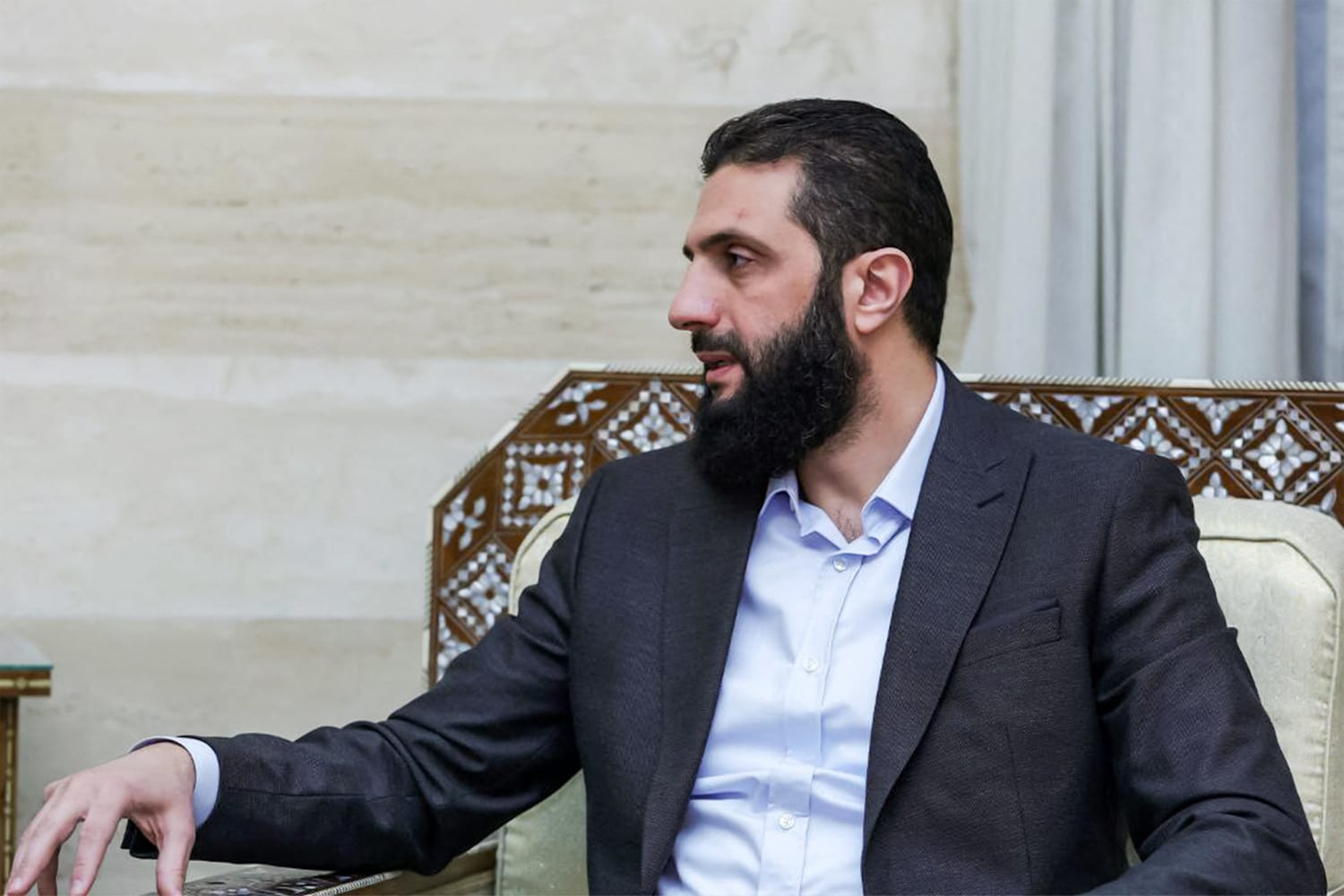
The fall of Bashar al-Assad’s regime in December 2024 marked a turning point in Syria’s recent history, opening a phase characterized by deep uncertainty but also by the possibility of change. In this new context, Abu Mohammad al-Julani, now known as Ahmed al-Sharaa, has emerged as a central figure in the country’s transitional process. His trajectory reflects a significant evolution, not only on a personal level but also within the broader Syrian political landscape, marked by a shift from an insurgent approach to a still-evolving governance structure. Understanding al-Sharaa’s current role therefore requires retracing the path he followed to consolidate his power during the Syrian war. In this process, al-Sharaa not only strengthened his authority but also gradually transformed the nature of Hay’at Tahrir al-Sham (HTS), the organization he leads.
From 2017 onward, HTS became the most important armed group in northwestern Syria. The organization took control of much of Idlib province and several surrounding areas. Initially, HTS brought together various Islamist factions. Over time, however, it succeeded in consolidating its position thanks to its operational superiority and its ability to coordinate its actions effectively. Its presence on the ground was based on a balance between the use of force and administrative governance. This enabled it not only to maintain power but also to govern the areas under its control effectively, thereby creating the political and operational conditions for al-Julani’s rise.
Al-Sharaa’s background lies within contemporary jihadism. After joining the jihadist insurgency in Iraq in 2003, he returned to Syria in 2011 and, the following year, founded Jabhat al-Nusra, a key armed group in the fight against the regime. Initially linked to al-Qaeda and embedded in a transnational jihadist perspective, his trajectory was also shaped by confrontation with the Islamic State, with which he quickly competed for control over networks and fighters in Syria. However, in 2016 al-Julani formally severed ties with al-Qaeda and initiated a reorganization of al-Nusra that culminated, in 2017, in the creation of HTS. This decision marked a crucial turning point, as it enabled the group to gradually redefine its role and become a local actor, officially distancing itself from global jihadist ideology.
In the following years, HTS changed its strategy under the leadership of al-Julani, shifting its focus toward a more localized approach through the control and administration of the areas under its authority. This development was accompanied by the growing centralization of power and the marginalization of more radical elements within the organization. At the same time, the group began to develop administrative and institutional structures, taking responsibility for security, dispute resolution, and the delivery of certain public services. In this sense, HTS’s legitimacy increasingly came to rest on its ability to maintain order and stability in a context of civil war.
The consolidation of this model in northwestern Syria represented the starting point for al-Julani’s subsequent political rise. The gradual weakening of the regime, exacerbated by the reduction of Russian and Iranian support and by shifting regional dynamics, opened up a space that rebel forces were able to exploit rapidly. In November 2024, these dynamics led to an offensive that resulted in the fall of Damascus and the end of the Assad regime, in a manner that surprised observers and international actors by its speed. In this new context, al-Julani’s role becomes even more significant, as his trajectory reflects not only a political transformation but above all an ideological and strategic shift. Whereas in the early stages of the conflict his discourse was strongly rooted in the construction of an Islamic State and a jihadist vision, over time he has progressively adopted a language more oriented toward political pragmatism and the national dimension. This change is evident both in his public rhetoric, focused on national unity and reconstruction, and in the construction of his image as a political actor attentive to the country’s stabilization and to dialogue with other actors.
However, the period following the fall of the regime clearly highlights certain limits and contradictions in this evolution. Syria under the leadership of Ahmed al-Sharaa remains a fragile system, characterized by incomplete territorial control and a political transition that, to this day, is deeply uncertain and unfinished. In particular, the difficulty in rebuilding a fully legitimate and functioning state authority continues to represent one of the main obstacles to the country’s stabilization.
In northern and northeastern Syria, following the power vacuum left by the regime’s fall, clashes occurred between the Syrian National Army, primarily supported by Turkey, and Kurdish forces, resulting in thousands of casualties and over one hundred thousand displaced persons. One of the most sensitive issues for the new government concerns the integration of the Syrian Democratic Forces (SDF), a predominantly Kurdish coalition, into state structures. The SDF controls large areas of the northeast and maintains its own military forces and autonomous administrative structures. Their integration is therefore not merely a military matter but involves redefining internal power balances and the degree of autonomy of Kurdish-majority regions. In this sense, the agreement signed in March 2025 between the government and the SDF represented a potential turning point for integrating the SDF’s military and civil structures into Syrian state institutions, constitutionally guaranteeing the rights of all groups. Despite partial progress, the implementation of the agreement has proved fragile and incomplete.
These challenges are compounded by the broader issue of rebuilding the military and security apparatus. The government must integrate a multitude of armed groups, many of which have not yet been incorporated into state forces. The widespread circulation of weapons among the population and the presence of autonomous militias make this process even more complex. Consequently, the disarmament of Kurdish forces represents a political and strategic priority, especially in light of pressure from Turkey. This is therefore not only a matter of formally reorganizing existing structures but also of managing a military transition in a country that remains fragmented and heavily militarized. Moreover, the threat posed by the Islamic State continues to be significant, as the group maintains an active presence, particularly in the east, through terrorist attacks and by exploiting territorial fragmentation. The failure to consolidate this process continues to fuel tensions and hinder Syria’s stabilization.
At the same time, sectarian tensions persist, challenging the government’s ability to ensure security and protection for minorities. Despite promises to avoid reprisals against the Alawite community, a wave of violence in March 2025 caused the deaths of hundreds of civilians, in some cases attributable to groups integrated into the state security apparatus. Meanwhile, in southern Syria, tensions between Druze communities and Bedouin tribes led to particularly violent clashes, fueling accusations against the central government and reinforcing the perception of selective security enforcement.
Political and institutional ambiguity also emerges. Despite official rhetoric emphasizing pluralism and openness, al-Sharaa’s government record currently appears inconsistent. A significant example is the handling of the Kurdish issue. The interim government assumed military control over much of the northeast, effectively curtailing the Rojava autonomous project. At the same time, al-Sharaa promoted some symbolic gestures toward the Kurdish population, including the recognition of the Kurdish language, the introduction of Newroz as a national holiday, and the promise to include elements of Kurdish culture in school curricula. However, this openness seems limited to the cultural sphere. Politically and economically, the government does not appear willing to relinquish control over the northeast’s main resources or to recognize forms of local autonomy, maintaining a policy oriented toward strong centralization of power. This approach reflects a broader trend in the new Syrian political order, which, while claiming to build a state representative of the country’s diversity, continues to be perceived by many minority communities as neither inclusive nor protective. The parliamentary elections of October 2025 saw limited participation by women and minorities, while the new provisional constitution raises questions regarding the risk of strong centralization of power in the absence of adequate guarantees for civil and political rights.
On the economic and international front, the situation remains equally complex. The partial suspension of U.S. sanctions in 2025 and the first signs of openness from some regional actors have not been sufficient to revive the economy, which remains severely affected by years of conflict. Persistent instability, weak institutions, and challenges in reconstruction continue to negatively impact living conditions, also limiting the return of refugees, which has occurred only to a small extent. The role of external actors further reshapes the balances of the transition. The United States has adopted a more pragmatic approach toward the new government, in line with the positions of certain regional actors such as Saudi Arabia and Qatar. Israel’s position, by contrast, appears more nuanced. On one hand, it has continued to expand its control in the south through military operations aimed at limiting the new government’s capabilities. On the other hand, recent developments have also fostered forms of indirect coordination intended to restore the 1974 agreement, with the assistance of the United Nations, aiming at a broader regional security arrangement.
In conclusion, al-Sharaa’s transformation highlights a central question: is this a genuine process of deradicalization, or a strategic adaptation aimed at political survival? The gradual abandonment of the transnational jihadist dimension and the focus on governance suggest significant evolution. At the same time, the continued use of force and centralization of power reflect elements of continuity with the past. Ideologically, mixed signals also emerge, since - although the group has never abandoned a critical view of democracy - the new political discourse emphasizes concepts such as representation, elections, and institution-building. In this sense, al-Sharaa appears as a hybrid figure, capable of combining political pragmatism with authoritarian control.
Syria’s future will depend on the new regime’s ability to translate this balance into a stable process of institutionalization. In the short term, the priority remains economic stabilization, in a context where the majority of the population lives in extreme precariousness and daily survival takes precedence over political dynamics. In the medium term, the challenge will be to build a truly inclusive system capable of integrating not only diverse ethnic and religious groups but also social categories deeply affected by the conflict. Finally, in the long term, the objective concerns “transitional justice” and national reconciliation—that is, the ability to heal wounds caused by decades of repression and years of war. Only the effective management of these three dimensions will allow Syria to move beyond the insurgent phase and build a genuinely inclusive political system.
Valentina Cannito