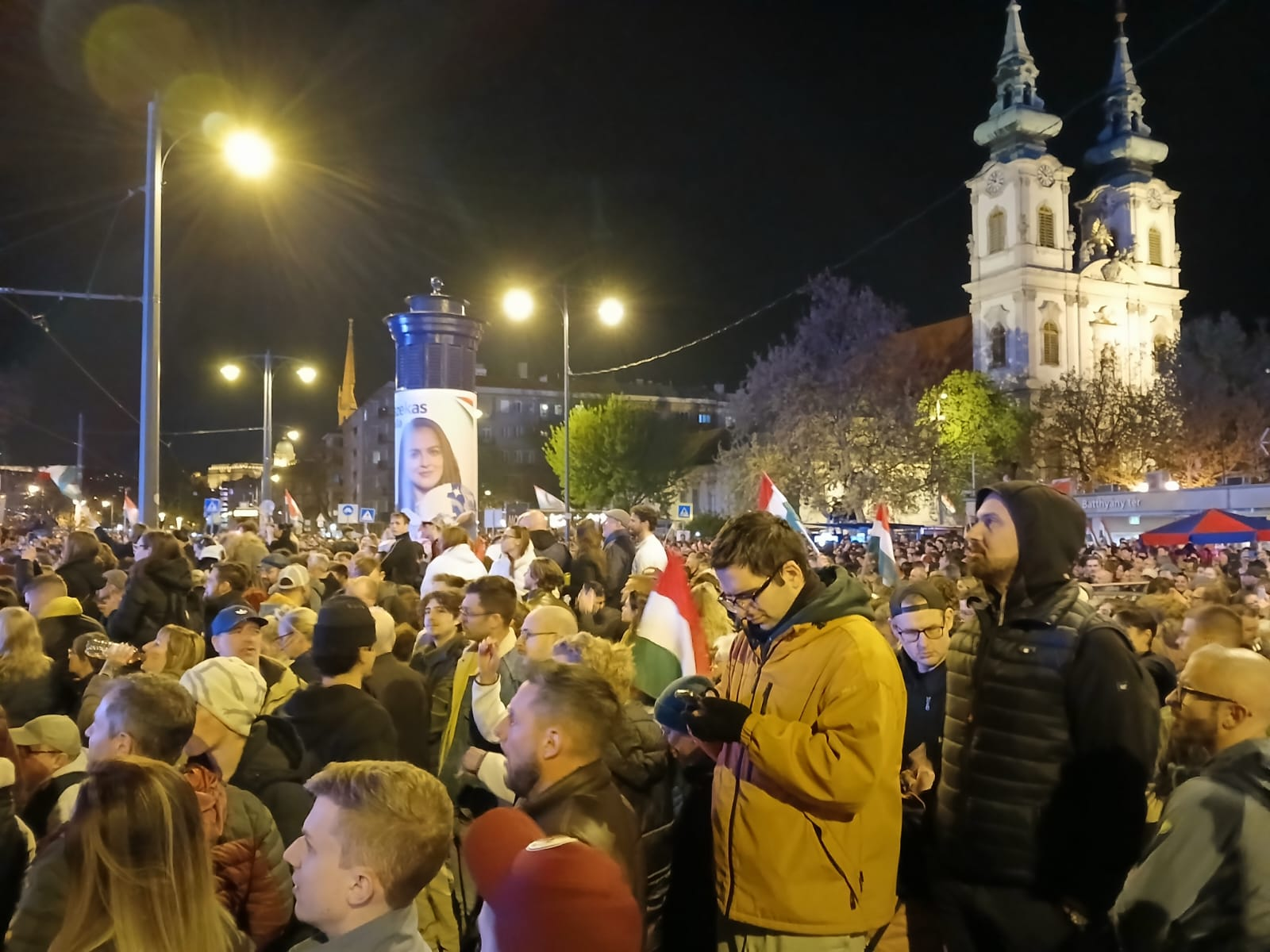
The defeat of Viktor Orbán carries an очевидent geopolitical dimension. For sixteen years, he had established in Hungary a model for the far right in Europe and the United States. Donald Trump himself had drawn inspiration from it. This model, described as an “illiberal democracy,” was gradually evolving toward a form of authoritarian regime. Its fall therefore also constitutes a new symbolic defeat for Trump.
Orbán’s regime had become deeply unpopular. This unpopularity is particularly strong among those under 30: 65% of them voted for the opposition Tiza party, and only 15% for Orbán. There is a strong generational divide: young people suffer from structural unemployment, and emigration in search of work is high. Other converging factors explain Orbán’s predictable defeat. As early as the 2010s, he clearly displayed his ambition to transform Hungary. As Steve Bannon, ideologue of the MAGA movement, pointed out, he was “a Trump before Trump.” The first step in this transformation was control of the media: today, nearly 85% of Hungarian media are under government influence. After public media, the few remaining independent private outlets were gradually targeted. Young people were able to access alternative information through the internet. The judiciary has lost all independence. It is the primary target of far-right governments, along with the press.
National memory remains marked by the tragic events of the 1956 Hungarian Revolution, particularly the massacres of civilians in Budapest by the Soviet army. However, anti-Russian sentiment could not be expressed for 16 years due to repression and media control. The authoritarian model inspired by the Vladimir Putin–Alexander Lukashenko tandem nevertheless provoked strong repulsion. Opposition leader Péter Magyar campaigned by denouncing Orbán’s very close ties with Putin. Today, Hungarians celebrating victory in Budapest are chanting “Russians out.”
This is compounded by a notable economic deterioration and a sense of decline. Poland and the Czech Republic have overtaken Hungary, whose economic model is in crisis: based on traditional industry (chemicals, internal combustion automotive), it showed its limits in the early 2020s. The drop in investment—linked in particular to the freezing of European funds (Hungary received only €800 million from the “NextGeneration EU” plan) and to Germany’s slowdown—has weakened growth. Inflation remains high and purchasing power is declining. In this context, economic concerns have overtaken ideological issues. Budgetary measures taken on the eve of the elections, often unfunded, have worsened imbalances.
A third determining factor lies in corruption. Hungary is now designated by the NGO Transparency Investigation as the most corrupt country in the European Union. The system built around power is based on clan-like logic, comparable to the Russian model. The Orbán clan, made up of around 13 individuals, concentrates 25% of the country’s GDP. The diversion of European funds is a central driver. This situation is increasingly rejected by the population and fuels the opposition’s discourse, notably embodied by its leader Péter Magyar, a former member of the ruling party, Fidesz.
Finally, Orbán’s foreign policy, long seen as an asset, has become a liability. His rapprochement with Russia, and his perceived alignment with Vladimir Putin, have sparked growing mistrust. Historically, Hungarians are not Russophiles. Energy dependence, particularly on Russian hydrocarbons, is poorly perceived, especially since its benefits for the population remain limited.
The overt support of American figures, such as Vice President J. D. Vance during the campaign, was also perceived as foreign interference. Likewise, the visit of Marine Le Pen to support Orbán highlights the symbolic importance of Hungary as a model for the far right.
Orbán’s defeat therefore goes beyond the national framework. It marks a significant setback for ultraconservative movements in Europe and the United States, for whom Hungary had until now served as a political laboratory.
Eric Djabiev