As expected, just one hour before the deadline set by Donald Trump to “unleash Hell,” the United States announced a new trucewith Iran. An event that was easy to foresee, given the international contextin which a highly significant role is played by a clownish president whose truevocation is that of a speculator capable of extracting personal profit fromabrupt stock market fluctuations. Fluctuations that are themselves easy toanticipate, since he can provoke them directly by virtue of the political roleto which Americans have unwisely elected him.
The classic trumpet call heard on the right around 6:30 a.m. Washington time—the temporary reopening of the Strait of Hormuz—came in extremis from the Iranian Foreign Minister Araghchi, via a post on X (formerly Twitter), putting an end to a situation that had pushed the price of a barrel of oil to around $115. This was answered on the left by a trumpet call on Truth Social, through which Trump declared victory: “following the agreement of the Islamic Republic of Iran for the full, immediate and secure reopening of the Strait of Hormuz, I declare my agreement to suspend [operations] for a period of two weeks.”
As expected, those concerned were thus able toproceed with purchases at the new prices—about 17% lower—of hydrocarbonspreviously sold short at the moment of peak military tension and highestprices. Similar operations were also possible on the stock markets, where therise was equally marked. The Japanese Nikkei 225 immediately recorded a jump of4.38%, while the South Korean Kospi surged by 5.71%.
Money, yes — the Nobel, no
This time, Donald Trump could not boast ofhaving resolved a new war, which according to his own count would have been theninth since the beginning of his second term. The credit was instead given toPakistani Prime Minister Shehbaz Sharif, whose “tireless efforts” in mediatinga ceasefire and obtaining Iran’s commitment to halt its defensive activities assoon as the Israeli-American aggression ended have been widely praised.
Another opportunity lost, then, to claim theNobel Peace Prize. In return, Trump told a news agency that the United Stateshad achieved a “total and complete 100% victory” on this occasion. All the moreso since the country on whose behalf the United States intervened in this war,Israel, announced in the early hours of Wednesday that it supported theAmerican president’s decision and would therefore suspend the savage attacks onIran that had characterized its actions during the weeks of war.
In this regard, however, Iranian authoritiesresponded by mocking Trump’s claims of military victory. Meanwhile, other, morediscreet sources note that the two-week truce just announced is also in theimmediate interest of Tel Aviv, which in recent times had shown unusually clearsigns of being overstretched.
“Gaza-style” war in Lebanon
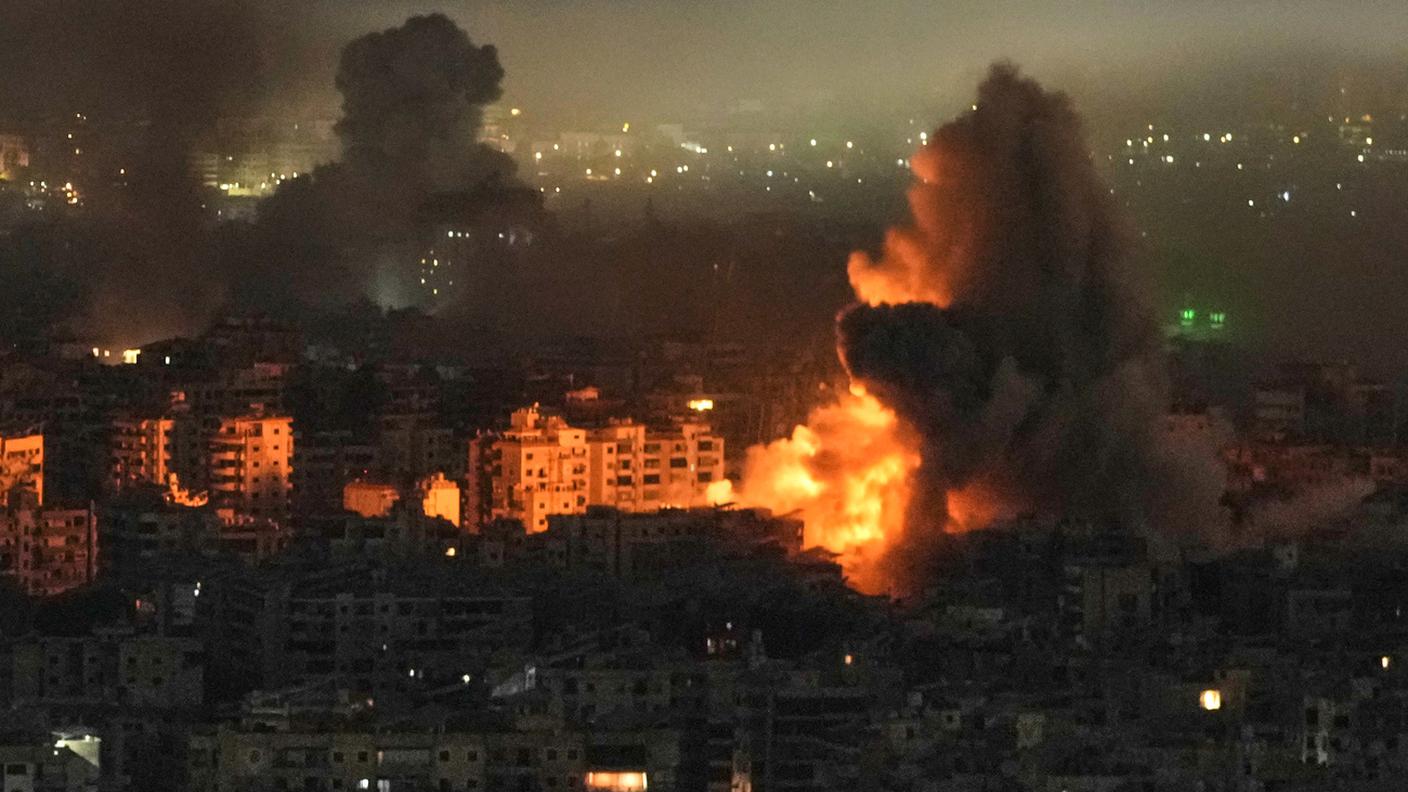
Tel Aviv, for its part, stressed that the truceobtained by the US and Iran does not apply to the parallel war beingwaged “Gaza-style” in Lebanon, which will continue without interruption. Andfrom a broader, longer-term perspective, Israel will support the effort openlyarticulated by Trump in recent days, aimed at creating a situation “where Iranwill never again be a threat — nuclear, ballistic, or terrorist — to America,Israel, the nearby Gulf Arab countries, and the world at large.”
In the festive, victory-showing atmospheredisplayed by Trump on Wednesday morning, it is not clear what will happenregarding the issue of enriched uranium, which was the main target of this war,and which remains securely underground in Iran, according to Trump himself, aswell as being repeatedly highlighted by Tel Aviv’s actions. On this matter,Trump said that it would be “perfectly taken care of, otherwise I wouldn’t haveagreed!”
In a surprise move, Trump — responding toquestions about a possible role played by China in the last-minute agreement —also said he was convinced that China had played a decisive role in thediplomatic process. That Beijing had encouraged Tehran to adopt a lessinflexible stance and negotiate with Washington. This was a way of confirmingthe American president’s intention to meet Xi Jinping in China in mid-May.
Europe in a Changing World
Very concerned — an interesting symmetry ofopposites — appeared the ineffable NATO Secretary General, Mark Rutte. Thismorning, April 8, 2026, he will be in Washington, where he has appointmentswith both Marco Rubio and the Secretary of Defense Pete Hegseth. Naturally, hewill also meet the mercurial president, who in the recent past has repeatedlyhinted at the threat that America might leave the Atlantic Alliance.
Trump expects a lot from him and has describedhim as a formidable and brilliant figure. In recent days, Trump has certainlynot been stingy with praise toward him. He certainly expects Rutte to maintainthe same servile line that drew attention when, essentially taking over fromthe Danish government, he “negotiated” a whole series of military concessionsin Greenland. And he is probably not mistaken.
Rutte seems convinced that he must play anincreasingly active personal role to try to overcome criticism of the Americanpresident’s aggression toward European states — some of which arerediscovering, amid many errors and obvious difficulties, the need to reclaimtheir sovereign character. A character of which he — despite all the airs heputs on and all the money NATO handles — is ultimately just an employee.
Meanwhile, Trump’s step back from the trap ofthe Strait of Hormuz, and the truce that Israel cannot refuse in its aggressionagainst Iran, represent a politico-diplomatic opportunity offered to theEuropean peoples. An opportunity on which, starting this morning, we shouldreflect seriously and carefully — and, if we are able, we must not let it slipaway.
Giuseppe Sacco
(first published: ultima edizione.eu, 8 of April, 2026)