Gaia Marchi
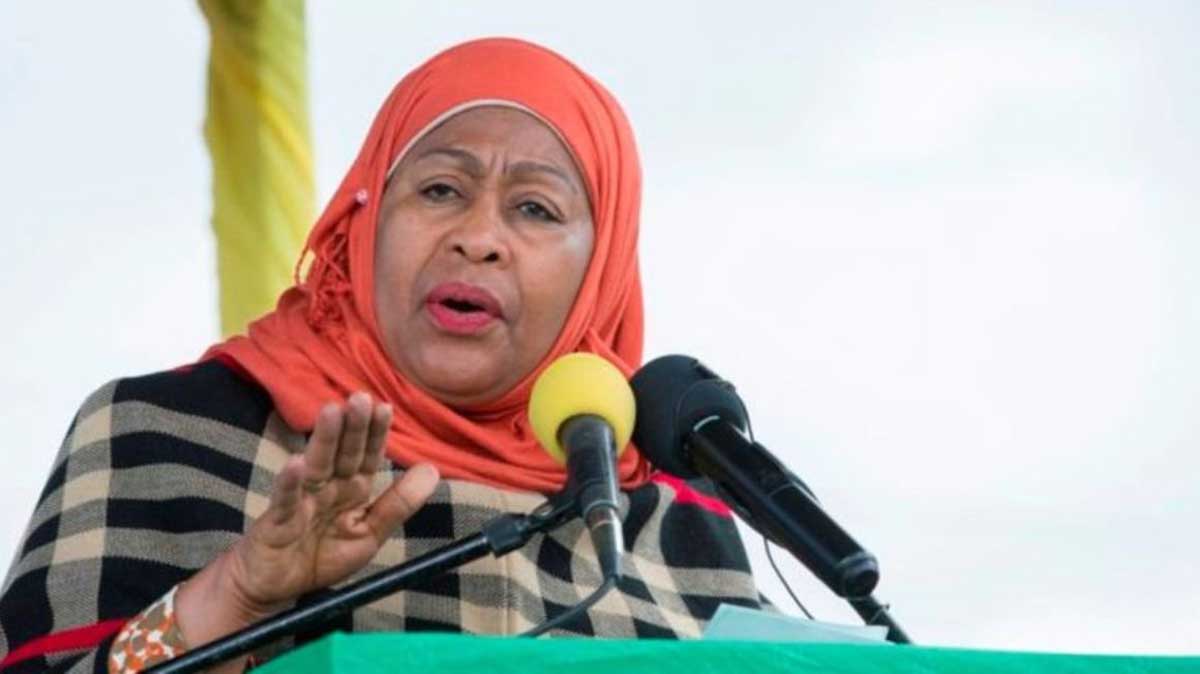
The elections of 29 October 2025 marked a turning point in Tanzania’s history: the Chama cha Mapinduzi (CCM, the Party of the Revolution) achieved a landslide victory, winning 98% of the vote. President Samia Suluhu Hassan was thus re-elected. A Muslim woman originally from Zanzibar, Hassan had already assumed the presidency following the death of former president John Magufuli during the Covid-19 pandemic, and has now been confirmed by popular vote. The president needed an overwhelming victory to reunify the CCM, within which she did not command unanimous support.
It is precisely this near-unanimous result that triggered the first protests. It is evident to everyone that the elections were rigged: not since 1961, the year of independence, had the country witnessed such violent clashes and protests in what is regarded as a model country of cohesion in East Africa. The protests, which often turned deadly, are mainly led by young people. As in Morocco or Iran, it is Generation Z that is taking to the strees in Tanzania. Tired of the corruption that plagues the country and the lack of prospects, they go as far as confronting the army in the streets of major cities, especially in Dar es Salaam.
Within hours, independent sources confirmed the death of two protesters, but the number is expected to rise. In the days following the elections, several international organisations and the UN reported “hundreds of victims”, without a verifiable final figure. The Tanzanian opposition accuses the government of having caused the death of around seven hundred protesters, but this figure has not been independently confirmed. It is indeed extremely difficult to assess the true scale of the protests and the number of victims, particularly in rural areas far from the capital. To prevent protesters from communicating and organising, the government shut down the internet across the country for nearly a week, contributing to widespread panic among the population. Moreover, the executive decided to deploy the army, which is viewed more favourably than the police, whose violence might otherwise have further escalated the clashes.
But how did the country reach this situation? As already noted, the CCM has dominated the political scene since 1961. During its early years, it operated as the sole ruling party, promoting a model of postcolonial citizenship which, while limiting political rights, promised economic development and social support. These promises were channelled through the policy of Ujamaa (“socialism” in Swahili), formalised in the Arusha Declaration of 1967. The manifesto committed the government to a development model based on agriculture, self-sufficiency, and collective ownership of the means of production.
However, from 1992 the situation changed due to international shifts. Although surveys conducted at the time showed that most of the population was in favour of maintaining the single-party system, the government decided to reintroduce multiparty politics. From that moment on, there was a gradual withdrawal of the state from the economy and social services, based on the belief that extensive state intervention led to inefficiency and corruption. This abrupt shift contributed to significant economic growth over the following thirty years - growth that nonetheless failed to improve the living conditions of a full third of the population.
The persistent social crisis is one of the reasons for the progressive deterioration of Tanzania’s fragile democracy and has contributed to the country’s current state of chaos. The CCM has managed to maintain a dominant position within the political system for several reasons. First, it has exploited the concentration of executive power and the marginal role of parliament to hinder opposition parties and control their activities, thereby containing dissent. This has faced little resistance due to the political and organisational weakness of the opposition: geographically confined to urban areas, it has failed to develop a coherent electoral programme or to move beyond reliance on individual charismatic leaders.
This has been reinforced by decades of co-optation carried out by the CCM towards opposition groups, civil society, and economic actors, which has dampened popular mobilisation and allowed a more orderly implementation of Ujamaa. The CCM has also shown great skill in managing, in a top-down manner, the transition from one-party rule to multiparty democracy, managing to control and adapt established practices of resource distribution between the central government and districts to the new system.
It has also overseen economic liberalisation and privatisation, building alliances with emerging business elites, which have further increased already high levels of corruption. An important role is also played by the political and institutional legacy of the single-party era and Ujamaa, given the strong support they enjoyed among the population despite their limits and contradictions. This has allowed the CCM to delegitimise the opposition, accusing it of fuelling ethnic and religious divisions and endangering the political stability that has characterised Tanzania since independence.
All of this also highlights the country’s strong nationalism and the pride of its people in having been such an important political reference point. These and other factors have led Tanzania to be classified today as ’not free’, a country where social conflicts have significantly intensified. Particularly striking is the generational divide between adults who lived through Ujamaa and the political transition, and who view the current situation with resignation - often saying: “at least we know how much CCM politicians steal; if another party came to power, we would be afraid because we would not know what situation we might find ourselves in” - thus fuelling abstentionism. On the other hand, a vast cohort of young people, faced with what is happening, refuse to give up and continue to fight, risking their lives for a better future.