Jacques de Larosière
The political and ethnic situation in Ukraine is, to say the least, complex.
In the western part of the country, Ukrainian-speaking inhabitants constitute a clear majority. It was this population that drove the anti-corruption and anti-Russian demonstrations on the Maidan square in Kyiv, where far-right movements — and, on the margins, neo-Nazi groups — ultimately prevailed in overthrowing President Yanukovych, who had been democratically elected. While Yanukovych was certainly favourable to collaboration with Moscow, he was by no means its vassal.
The situation in Crimea is comparatively straightforward, insofar as Russian-speaking inhabitants represent approximately 70% of the total population. It should be recalled that in 1944, Stalin and Beria expelled the Tatars — who had been present in Crimea for centuries — and forcibly deported them to Uzbekistan.
The situation of the Donbas is more complex. At the time of the founding of the USSR, Ukraine had been compelled to cede the Donbas to Russia, which gave rise to waves of Russian migration and population movements in both directions. Today, the Donbas is composed of 44% Russians and 46% Ukrainians ; in urban areas, Russian speakers account for 48% of the population (87% in Luhansk).
The ethnic data are therefore broadly comparable and cannot, in and of themselves, provide a definitive resolution to the Donbas question.
Taken as a whole, Ukraine presents itself as a genuine ethnic mosaic : 57% of inhabitants speak only Ukrainian (primarily in the west) ; 29% are Russian-speaking Ukrainians ; 17% are of Russian origin.
The Russian-speaking population of the Donbas participated in the Ukrainian political process following the post-Soviet referendum of 1990. It was their votes that enabled the election of leaders such as Yanukovych, who governed in cooperation with Moscow. Much the same can be said of President Yushchenko who, despite his deep attachment to Ukrainian identity, was able to maintain relations of collaboration and mutual trust with Russia.
The Donbas accounts for approximately 12% of Ukraine’s GDP. Once a prosperous region — the birthplace of Stakhanovism and a major centre of Soviet industrial high technology, particularly in the aerospace and defence sectors — it has been in profound crisis for some twenty years. Built upon coal extraction, it has experienced massive economic depression, with annual income losses on the order of 80%, and has become increasingly dependent on financial support from Ukraine.
Yet Ukraine has neither the means nor the political will to support this eastern region, let alone to undertake its structural transformation. This situation led the Donbas, having initially chosen to remain within Ukraine following the collapse of communism, to progressively distance itself from Kyiv, ultimately declaring war on the Ukrainian government in 2014 — eight years before Russia’s invasion of Ukraine in 2022.
According to this analysis, the Donbas came to the conclusion that it could expect nothing from a state perceived as distant, weakened, and corrupt, and that it must instead turn towards a natural hinterland : Russia.
No agreement can bring lasting peace to this region without addressing the question of economic revitalisation in a province experiencing a humanitarian crisis. It would be necessary for multilateral institutions — the World Bank, the EBRD, the EIB, and others — to participate actively in this restructuring and to remove the obstacles impeding access to international financing.
In sum, Ukraine is an ethnically highly diverse country. Only the western part displays a degree of relative homogeneity that might allow it to exist independently of Russia.
By contrast, the integration of the central part — historically linked to Russia for more than two centuries under the designation “Little Russia” — presupposes, from this perspective, close cooperation between Ukrainians and Russians. The “Maidan spirit,” perceived here as characterised by confrontation, would be incompatible with peaceful coexistence.
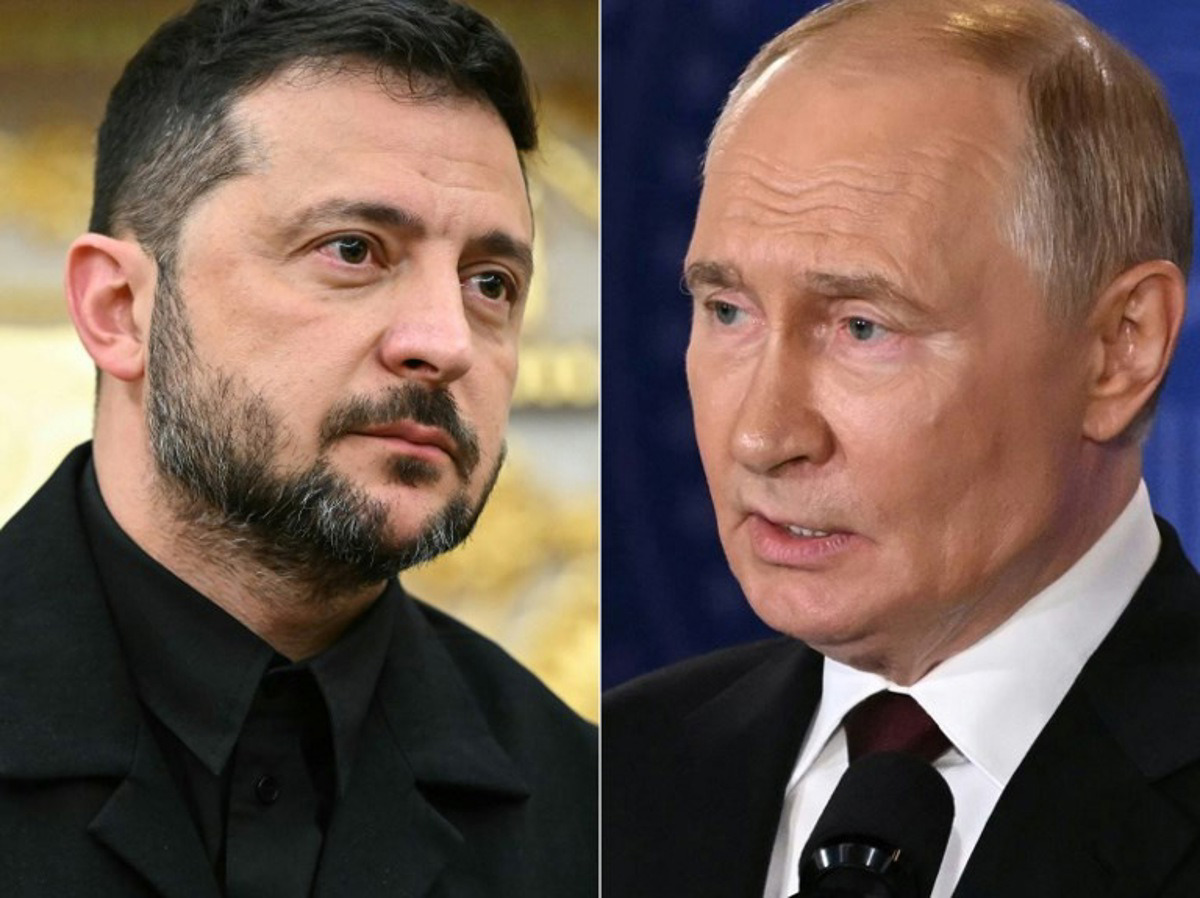
President Zelensky is portrayed as embodying this anti-Russian disposition, while the approach of Kravchuk — the first president of independent Ukraine — is invoked as a model grounded in the pursuit of accommodation with Russia.
One possible solution for managing these tensions would be to transform Ukraine into a federal state, granting meaningful autonomy to its various regions rather than maintaining a centralised system.
This was, in particular, the objective of the Minsk Agreements, signed in 2021 by Russia and the various parties concerned, but which remained unimplemented on the ground before being abandoned on the eve of the conflict.