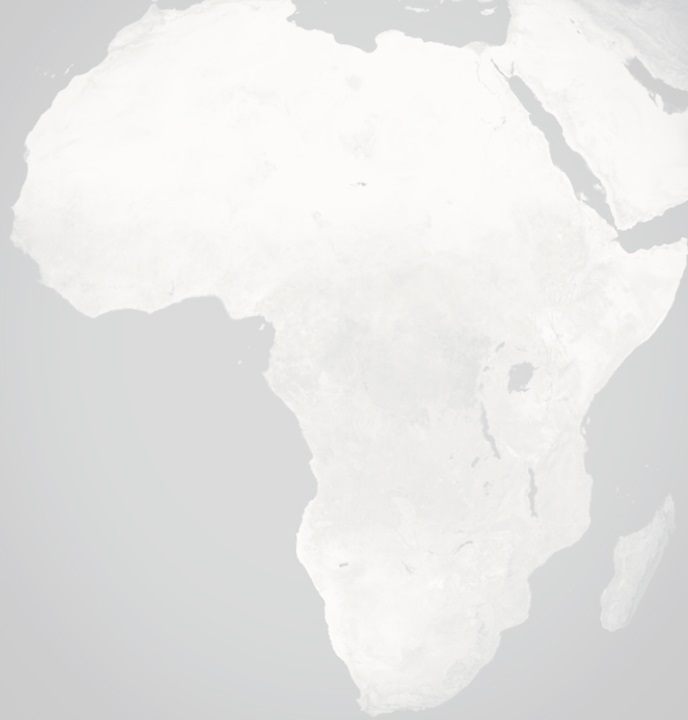
In 1960, with the recovery of independence, Africa inherited an entirely new form of political organisation: the nation-state, defined by fixed, demarcated borders. These borders corresponded to the lines that former colonial powers had drawn to delimit the geographic extent of their presence. Far from reflecting the human realities of the continent, they obeyed an exclusively political logic, shaped by rivalries between neighbouring powers. At the time of independence, the Organisation of African Unity (OAU) recommended the absolute respect of the principle of the intangibility of borders inherited from colonisation. At the time, this was simply prudent. The partition was admittedly far from satisfactory — ethnic groups were divided, culturally and historically antagonistic communities were forced to coexist, and some borders were incoherent to the point of absurdity, such as the Caprivi Strip or the enclave of Cabinda — but everyone could imagine the near-impossible negotiation required to achieve any version of border perfection. Today, this principle appears to have reached its limits. After all, as the man of letters reminds us, “human history is the history of shifting borders.”
Our world is in turmoil. Events with global consequences follow one another relentlessly, disorganising societies at every level and on a massive scale. Some, driven by climate change, reflect deep environmental transformations; others, of a sanitary nature, demonstrate the permeability of a world that has become impossible to compartmentalise. No one can prevent this. Political and security developments, however, are accelerating and growing more complex as a result of a notable shift in the way crises and disputes are resolved. Force increasingly replaces law, and the international order struggles to make itself heard in a game where each actor can rely only upon itself. This will not be without consequences.
In Africa specifically, long-standing conflicts persist without resolution. Certain situations have become so intractable that those tasked with resolving them now openly acknowledge their complete inability to effect any meaningful change. As a result, African voices are now being raised to propose a measure of last resort: the physical separation of belligerents. They are proposing, in other words, a redrawing of borders. Sudan, Mali, Libya, Ethiopia, the Democratic Republic of Congo, Somalia — all could be affected.
This issue is not new. At the end of the Cold War, a first departure from that “holy principle” was already conceded when Eritrea was created in 1991. Some years later, the African Union — successor to the OAU — itself deviated from the rule, under American pressure, by recognising the necessity of splitting the vast original Sudan into two entities: South Sudan and the present-day Sudan. This clearly demonstrates that turning to such a process is not absurd, and that those advocating it today deserve serious attention. Paradoxically, pressure to redraw borders arises from two diametrically opposed rationales. On one hand, the law of force, whereby the powerful act out of self-interest to seize what they cannot obtain through negotiation. On the other, the force of law, when the accumulation of atrocities inflicted upon desperate populations generates, more through shame than genuine compassion, sufficient pressure to compel action.
In either case, borders will move. Without underestimating the potential consequences of such changes, it is nonetheless useful to examine the most emblematic cases — if only to prepare ourselves for these geographic transformations.
In the new Sudan — created by the 2011 partition — conflict has long been present, but the current war is truly one of both absurdity and horror. Since the 2021 coup d’état, which overthrew the only elected president in the country’s history, two allied generals have imposed themselves on the national stage. They have now been locked in a lethal confrontation for three years. The first controls the east of the country; the other holds the west. Outside states support each camp, sustaining the conflict by supplying substantial quantities of weapons and ammunition. No mediation effort has succeeded; both generals remain entrenched in their positions. Massacres, killings, rapes, and other abuses are unrelenting, and a terrified population is fleeing the combat zones in desperation. According to the United Nations, the situation in Sudan is currently the worst humanitarian catastrophe in the world. Beyond the war itself, homes lie in ruins, water supply networks have been entirely destroyed, and epidemics — including cholera — are rampant. The situation has become wholly uncontrollable and unbearable. In international forums, certain authorities now openly raise the prospect of a new partition of the country — presented as the only solution to separate the warring factions, freeze the fighting, and bring about a lasting resolution. The western entity would encompass the two Darfurs and the two Kordofans; the eastern entity would cover the rest. This division would thus run east–west, whereas the 2011 partition ran north–south. Welcome to Western Sudan and Eastern Sudan.
In Mali, the development may occur organically, driven by the evolution of the situation on the ground. In recent weeks, the jihadist group Jama’at Nusrat al-Islam wal-Muslimin (JNIM) allied itself with the Azawad independence movement to wage armed operations against Malian authorities. Azawad, in northern Mali, encompasses Tuareg, Arab, and Fulani populations, among others. Their combined forces have seized almost all of northern Mali, compelling local garrisons — even those reinforced by Russian Africa Corps mercenaries — to capitulate and negotiate their own withdrawal. Without a decisive response from the Malian authorities, partition may soon become a “fait accompli”. Welcome to Azawad.
In Libya, conflict has persisted since the collapse of the state and the fall of President Gaddafi. Here again, two rival entities compete in brutality: the Government of National Unity (GNU) in the west and the forces of Marshal Haftar in the east. Families and clans have traditionally lived in an anarchic and fractious manner in the vast Libyan desert since time immemorial. While Gaddafi had managed to impose a degree of national unity through a subtle system of alliances, the same cannot be said of the present situation. Here too, separation is being proposed as a potential means of restoring peace. Welcome to Tripolitania and Cyrenaica.
The Ethiopian case is more complex. The conflict here has not yet materialised and currently remains at the level of rhetoric. Since the creation of Eritrea in 1991, Ethiopia has lost its direct access to the Red Sea. This vast country, with a population approaching 100 million, has faced enormous supply difficulties ever since these new borders were established. Today, a costly agreement with Djibouti allows Ethiopia to use, under difficult conditions, a railway line and a single road linking the two capitals. This arrangement is plainly insufficient. This dependence on its neighbours — Eritrea, Djibouti, Somalia — for its own survival, and the vulnerability it entails, has become intolerable for the Prime Minister. He recently declared that, unable to do without sea access and faced with international indifference on the matter, Ethiopia considered itself entitled to resort to force. He has set his sights on the Assab corridor, in southern Eritrea — the main, and already well-equipped, Ethiopian outlet to the Red Sea during the Cold War. An internal conflict in Tigray, Ethiopia’s northernmost region, currently ties down the Ethiopian army, preventing the Prime Minister from acting on his threats. Welcome nonetheless to a potential Greater Ethiopia, at the expense of a diminished Eritrea.
In the DRC, fierce fighting has been ongoing for over thirty years along the country’s eastern border, in the provinces of Kivu and Ituri. The army of neighbouring Rwanda, supported by a local militia created for this purpose — the M23 — has seized a vast territory within the DRC in order to, according to Rwanda’s president, establish a buffer zone preventing a repeat genocide of Tutsis within his country. In practice, this pretext has primarily served to justify a sustained presence aimed at plundering the region’s abundant mineral resources — coltan, niobium, and others. The DRC’s president has raged, threatened, pleaded, and appealed to the international community, to no avail. The area is so remote from the Congolese central government that any meaningful intervention faces considerable logistical and operational obstacles. The fighting is deadly, and the civilian population endures daily suffering. Multiple peace plans, the deployment of UN peacekeeping forces, and even the transactional mediation efforts of President Trump — tied to the prospect of securing access to rare earth minerals — have resolved nothing. Gradually, the idea of a partition, negotiated or otherwise, is taking shape. Welcome to a Greater Rwanda incorporating a Tutsiland, at the expense of a diminished DRC.
The case of Somalia is arguably the most complex. In this country — the only mono-ethnic state in Africa — language, culture, and religion are universally shared, yet national unity has never been able to take root. The explanation lies in the nature of local social organisation, which is fundamentally clan-based. Each clan follows its own code of conduct, incompatible with those of neighbouring clans; any inter-clan dispute demands, by custom, a settlement in blood. As a result, incessant quarrels rapidly descend into chaos. Left to its own devices at the end of the Cold War, the country fragmented. Since then, each clan has sought to organise itself internally, withdrawn behind its own borders: Somaliland, Puntland, Shebelleland, Jubaland, and others. This arrangement reflects a kind of organic process, responding to the realities of ancient local cultures. Ignoring or dismissing these realities, the international community has spent thirty-five years attempting to impose national unity — without success. The deployment of a UN force in the mid-1990s ended in disaster and permanently deterred the United States from participating in similar international missions. Today, Somalia is defined by total anarchy, incessant conflict, and the additional complication of the jihadist group Al-Shabaab — in short, the population endures hell. One clan, the Isaaq, established in Somaliland, has proclaimed the independence of the region, recognised last month by Israel. For political reasons, other states may follow — including Ethiopia, which might recognise Somaliland as a means of negotiating sea access to the Red Sea, or the United States, as part of the transactional diplomacy that is President Trump’s hallmark. Welcome to Somaliland, at the expense of a diminished Somalia.
All of this will of course not occur without consequences — those that are foreseeable, and those that remain beyond our current imagination. In this respect, the remedy may prove worse than the ailment. Édouard Herriot warned us: “between peoples and between men, the problem of the shared wall is the one that raises the most difficulties.” Voices will certainly be raised against what may be seen as reckless folly. Yet regardless of whether it is the will of a powerful actor to expand its territory, or the unbearable shame of witnessing populations subjected to martyrdom, African borders are going to shift — and soon. We must prepare for it.