Giorgio Malfatti di Montetretto
Following the dissolution of the Soviet Union, the heart of Central Asia underwent a profound geopolitical transformation with the emergence of five new republics in 1991, while three others appeared in the neighboring Caucasus region. This process brought to an end more than two centuries of Russian and Soviet domination over the area. Although independence was proclaimed at roughly the same time, the formal declarations were issued on different dates for purely administrative reasons: Kyrgyzstan on 31 August, Uzbekistan on 1 September, Tajikistan on 9 September, Turkmenistan on 27 October, and finally Kazakhstan on 27 December.
This independence, achieved without armed conflict, came as a surprise to societies that had never experienced genuine national sovereignty. Unlike the Baltic or Caucasian republics, none of the Central Asian countries had ever been independent. Since the October Revolution, a ruling class only partially indigenous had established itself in Turkestan, deriving its authority primarily from the legitimacy conferred by the Communist Party of the Soviet Union (CPSU) and, secondarily, from its control over local patronage networks. These leaders, trained within the Soviet apparatus, were later, during Mikhail Gorbachev’s perestroika, largely replaced by officials of local origin in order to reduce the resistance generated by the appointment of exclusively ethnic Russian administrators. Nevertheless, they remained, of course, subordinate to the interests of the Kremlin.
This subordination was reflected, among other things, in their acceptance of the environmentally devastating cotton monoculture that served the Soviet textile industry, as well as in the establishment on their territories of sites designated for nuclear testing. With the creation of the Commonwealth of Independent States (CIS), the newly independent republics thus found themselves governed by members of the former communist elite, who were formally confirmed in power through electoral processes. Democratization in these states has proved to be a complex and uneven process: each country has followed its own path, and none of these trajectories can yet be considered complete.
Because of its ethnic and cultural diversity, the region has always remained distant from both the Russian and the Western political traditions. Soviet-era Russification sought to sever local populations from their historical roots through the imposition of the Russian language, the deportation of entire ethnic groups (including Volga Germans, Chechens, Ingush, and others), and the repression of Islam, the region’s majority religion. In such a context, neither a pluralistic political culture nor political parties other than an authoritarian communist one could realistically emerge.
At independence, the republics adopted strongly presidential systems of government. Their parliaments were composed of parties in which personal loyalties often mattered more than ideological commitments. At the same time, communist symbols were rapidly replaced by emblems drawing upon national history and cultural traditions. The teaching of local languages was promoted at the expense of Russian, sometimes accompanied by a transition from the Cyrillic to the Latin alphabet. Freedom of religion was formally restored, allowing the construction of mosques, while Islam gained a more visible place in public life. Meanwhile, the presidents assumed the symbolic role of founding fathers of the new nations.
The authoritarian tendencies that continue to be denounced by human rights organizations do not necessarily imply a risk of dictatorship in the classical sense of the term. Rather, they should be understood as departures from the Western concept of democracy, reflecting what some international analysts have described as “local paths of democratic development.” Nevertheless, in the current international environment, Central Asia remains, by virtue of its history and geographical position, vulnerable to authoritarian pressures and geopolitical rivalries.
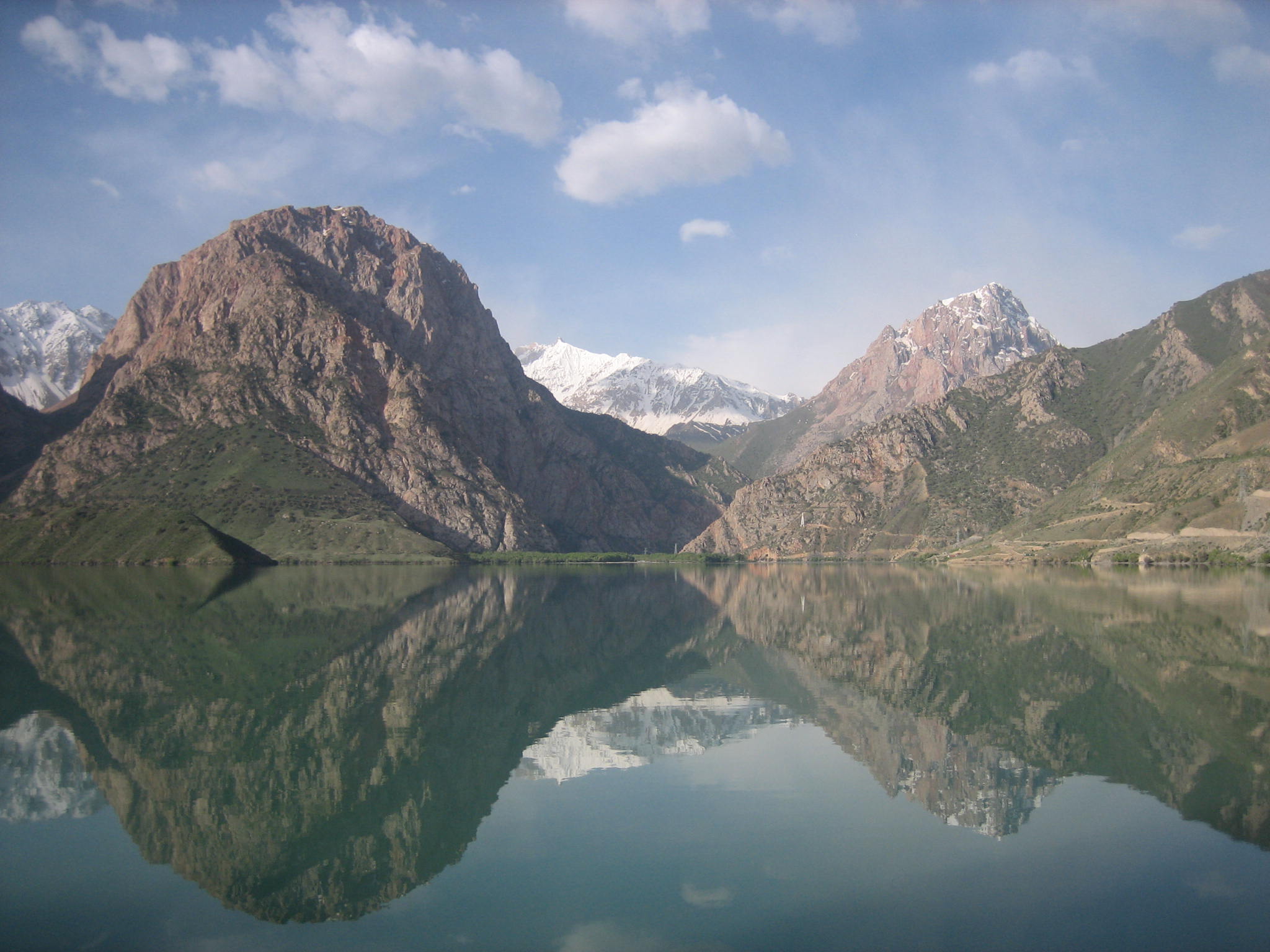
Located east of the Caspian Sea, these countries consist largely of steppes, deserts, and mountain ranges, watered by the Amu Darya and Syr Darya rivers and fed by the glaciers of the Tian Shan and Pamir mountains. Beyond their shared Soviet past, they possess several common structural characteristics: they are landlocked, sparsely populated, rich—albeit to varying degrees—in natural resources, and governed by highly personalized political elites. These elites seek to manage relations with global powers in order to preserve stability and, with it, their continued hold on power. (1 – to be continued)