Giorgio Malfatti di Montetretto
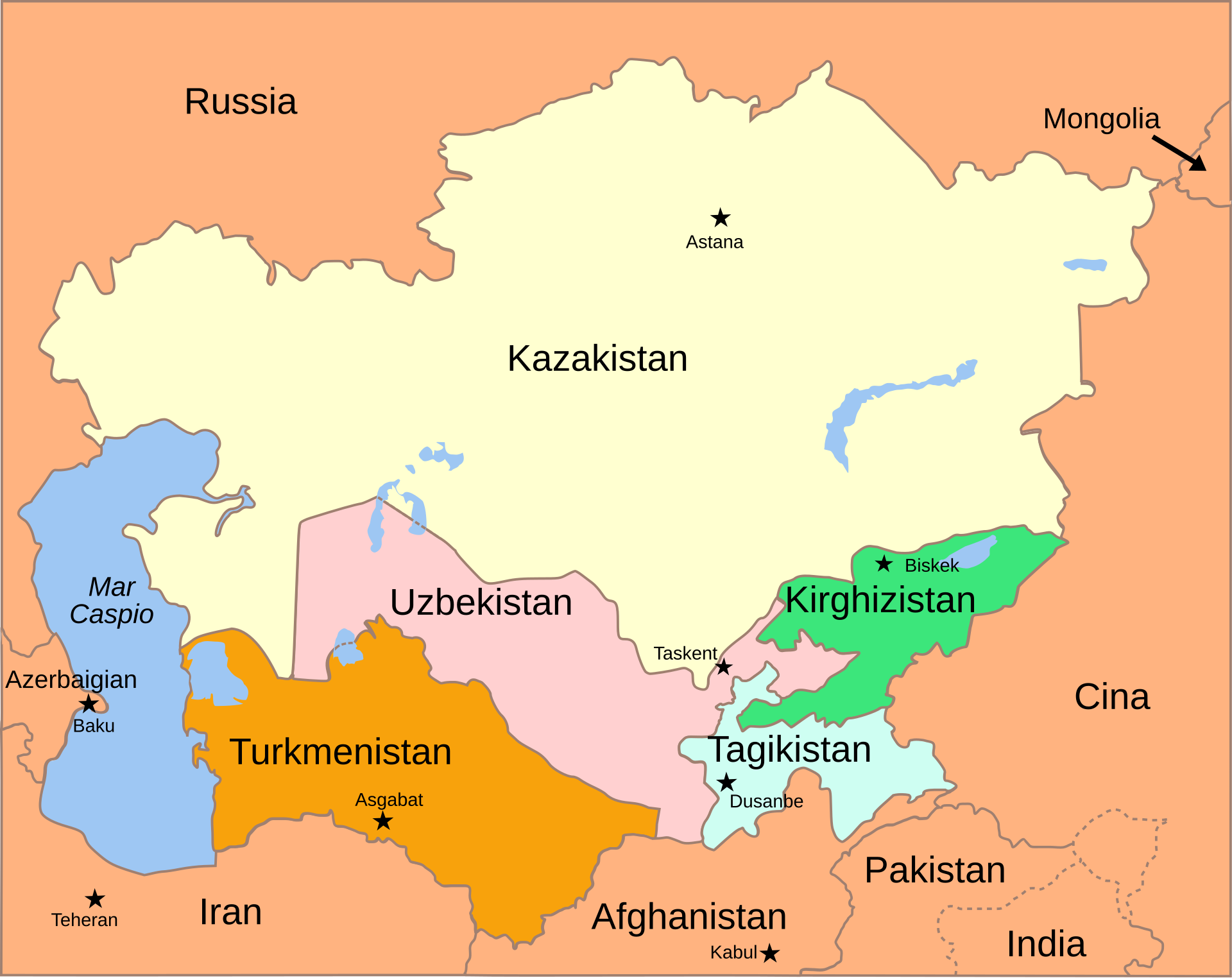
The war in Ukraine has highlighted the weaknesses of the former Soviet “-stan” countries of Central Asia, which, although already well known, have been exacerbated by the current international environment. The most significant challenge, and perhaps the most important one, is the lack of access to the open sea. All of these countries belong to the category of Landlocked Developing Countries (LLDCs), meaning that they have no direct access to maritime routes and are therefore disadvantaged in international trade. Economists estimate that countries in this situation lose around 20% of their development potential.
This condition is particularly detrimental to economies rich in energy resources, such as Kazakhstan, Uzbekistan, and Turkmenistan. To export oil and gas, these countries must rely on infrastructure inherited from the Soviet era, much of which remains under the control of Russian energy companies. These transport routes cross Russia and the North Caucasus before reaching the terminal of Novorossiysk on the Black Sea.
The search for alternatives has encouraged the development of connections with China, although this carries the risk of creating a new dependence on another great power. Another major weakness is the strong dependence of Central Asian economies on raw material exports and on imports of capital and consumer goods. More than half of the region’s exports consist of oil, gas, and minerals, while imports of manufactured goods and machinery remain high. As a result, the manufacturing sector remains underdeveloped. This economic structure increases vulnerability to external shocks and fluctuations in international commodity prices.
These weaknesses are compounded by structural inefficiencies inherited from the Soviet period, particularly in water and energy supply systems. Distribution networks are outdated and characterized by uneven territorial coverage. Much of the irrigation system dates back to the Soviet era and results in losses approaching 50% of water resources before they even reach agricultural use, owing to leakage and evaporation. Consequently, water productivity—that is, the efficiency with which water is used—in Central Asia is among the lowest in the world.
Despite recommendations from the World Bank, investments aimed at improving irrigation efficiency have, in most cases, remained insufficient. The situation is further aggravated by corruption and by fragmented management of transboundary water resources, with the interests of the countries involved often diverging. Tajikistan and Kyrgyzstan, where the region’s two major rivers originate, enjoy privileged access to water resources, while Kazakhstan and Uzbekistan are heavily dependent on their neighbors.
These shortcomings have contributed to a sharp rise in consumer prices, especially in the food and energy sectors—a paradox for countries that are major energy producers—leading to a surge in inflation that has reached some of the highest levels among developing regions. The protests that erupted in Kazakhstan in 2022, triggered by rising energy prices, provide a striking example.
Finally, climate change represents an additional source of structural pressure on Central Asia. Rising average temperatures, combined with increasingly frequent droughts, are accelerating the melting of mountain glaciers, with direct consequences for water availability, soil degradation, and the sustainability of agricultural systems.
Although the region possesses significant water resources, growing demand from industry and agriculture, combined with dependence on transboundary river basins, is raising concerns about future water availability. Since the middle of the twentieth century, water consumption has exceeded the resources available in upland areas, while water infrastructure dedicated to agriculture has been undermined by structural inefficiencies.
Climate change has further worsened the situation. In many places, water scarcity has dramatically altered both landscapes and the daily lives of local populations. Moreover, under the combined pressure of increasing water shortages and demographic growth, disputes are emerging among Central Asian states.
The Syr Darya and Amu Darya rivers remain vital resources, providing not only drinking water but also energy, fisheries, and agricultural production. Their flow, however, has already been significantly affected by the intensive irrigation policies implemented during the Stalin era to boost cotton production.
The most dramatic consequence of these ill-conceived projects remains the desiccation of the Aral Sea. Once the fourth-largest lake on Earth, with a surface area nearly equivalent to that of Belgium and the Netherlands combined, this vast body of saline water has now lost around 90% of its original volume, making it one of the most severe environmental disasters of the twentieth century.
In this context, climate change acts as a multiplier of pre-existing vulnerabilities, exacerbating economic and social imbalances and intensifying competition for access to natural resources. (3 – to be continued).