Grégory Herpe
What Witkoff and Kushner Came to Seek
Peace, if one can call it that, has had a rather unlikely face in recent months.
Steve Witkoff, a New York real estate developer turned Trump envoy for the Middle East and then for Ukraine. Jared Kushner, his son-in-law. The two men have supplanted Keith Kellogg—the official special envoy for Ukraine, a retired general and a man who has worked on the file from the start—to the point that Kellogg ended up resigning after discovering he had been sidelined without ever being told so directly. You can’t make this up.
Zelensky receives them. He calls them. In December 2025, after Mar-a-Lago, he announces that 90% of a potential agreement is already set—security protocols, economic agreement, terms of a ceasefire. Largely finalized. The remaining 10% is territory. What Russia controls: around 20% of Ukrainian territory. Donetsk, Luhansk, Zaporizhzhia, Kherson. Entire oblasts that Moscow demands be formally recognized as Russian as a condition for any agreement. Zelensky reiterated last May that he would sign nothing that enshrines these illegal annexations. No ceasefire without solid security guarantees.
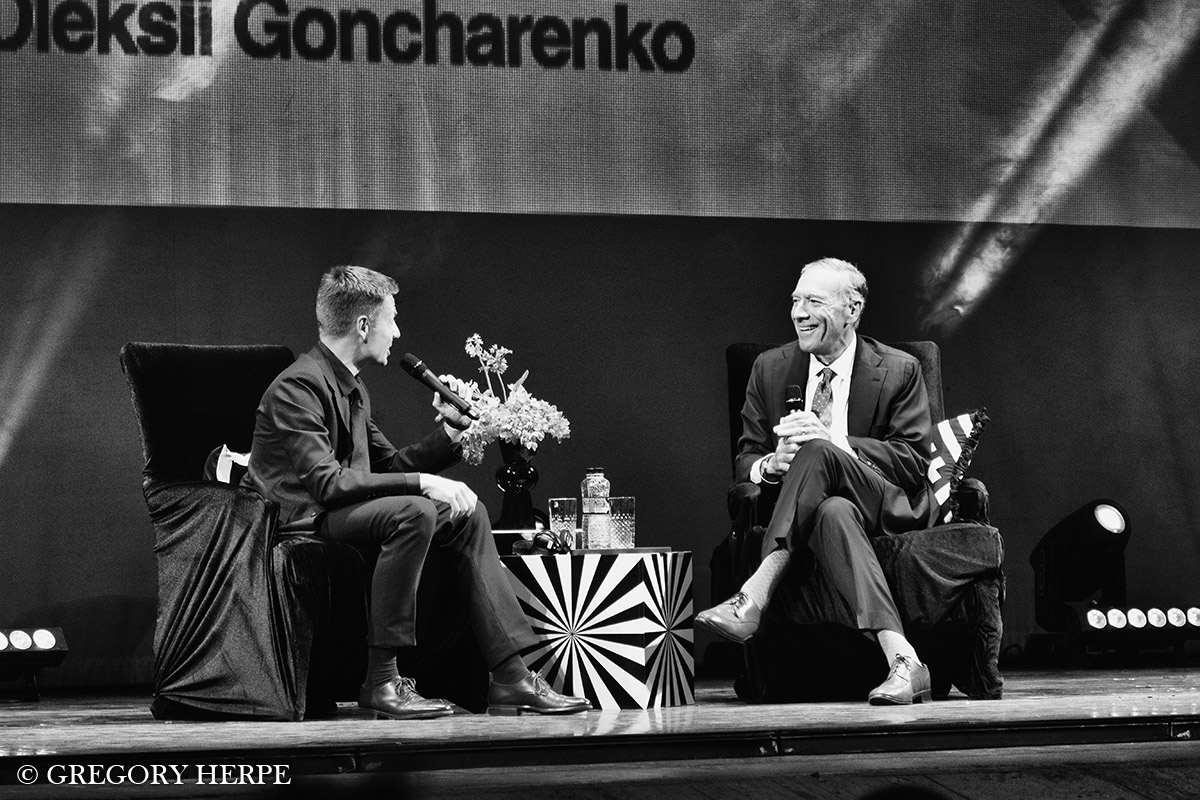
The loop is well known. It has been running for months. “The middle of the game,” as the Black Sea Security Forum in Odesa called it a year ago, where I was invited—we are still there.
The question of legitimacy, or how Putin negotiates by proxy
In May 2024, Zelensky’s presidential mandate expired. He governs under martial law, which Ukrainian law allows—elections are prohibited in wartime.
Putin uses this argument at every opportunity: the counterpart is illegitimate, he claims. 59% of Ukrainians trust Zelensky according to a KIIS poll from late 2025. That is more than most European leaders in peacetime. But the Russian narrative exists, circulates, and feeds discussions in certain Western capitals uneasy with institutional ambiguity.
Washington had pushed for elections by May 2026. Kyiv responded with a parliamentary working group and a formula: no elections without a ceasefire, no ceasefire without guarantees. The door remains slightly ajar—just enough so that no one can accuse Zelensky of having closed it.
What Putin failed to achieve militarily—destroying the Ukrainian state—he seeks through diplomatic mechanics. Undermining the legitimacy of his counterpart. Occupying the institutional space left open by war. The Ukrainians have understood the game. They are playing it too.
Évian, Ankara — the agenda that matters
This month of June, Ukrainian diplomacy is operating at full intensity.
On June 7, Zelensky was in London with the three major European powers—joint statements, arms pledges, barely veiled ultimatums to Moscow.
On June 10, Nordic and Baltic leaders backed the “irreversible accession” of Ukraine to NATO. The word “irreversible” does all the work—it bypasses future hesitation.
On June 16, Évian-les-Bains, G7. Macron invited Zelensky. Military support, pressure on the Russian economy, cohesion of an alliance intermittently strained by Trump.
And on July 7, Ankara. The NATO summit at the Beştepe Presidential Complex. Thirty-two heads of state. Kyiv is requesting a dated roadmap to membership—milestones, not declarations of principle. The United States is slowing things down. Europe is pushing. Erdoğan’s Turkey, as host country, plays its own tune between Moscow and Washington. What Ukraine obtains in Ankara will determine what it can or cannot concede in peace negotiations. The two agendas are inseparable.
What “90% agreement” really means
Saying that 90% of an agreement is settled also means that the remaining 10% is the essential part.
One can agree on protocols, economic corridors, and technical modalities of a ceasefire. One cannot agree on land. Land is where the conflict began, the reason hundreds of thousands of people have died since 2014.
Putin needs a domestically legible victory. Keeping the occupied territories is the minimum version of that victory.
Zelensky cannot sign a peace that looks like defeat—not after four years, not with an army that still holds, not if it fractures Ukraine from within.
That is also what I saw in Kyiv’s blazing sky on that May night.
The drones, the luminous trails, the breath tightening in the chest. And somewhere above me, an Oreshnik crossing the atmosphere at a speed the eye cannot follow, capable of carrying what no one wants to name out loud.
The Chernobyl Museum was burning while diplomats were on the phone.
The children of Brovary were sleeping in their shelters.
Under the schools of Kharkiv, notebooks were waiting for the next morning.
This is Ukraine in May 2026. Not a symbol. Not a lesson. A country that holds on—and that rightly wonders what the rest of the world is really waiting for to tell it how much longer. (2 – end)