Chloé Maurel
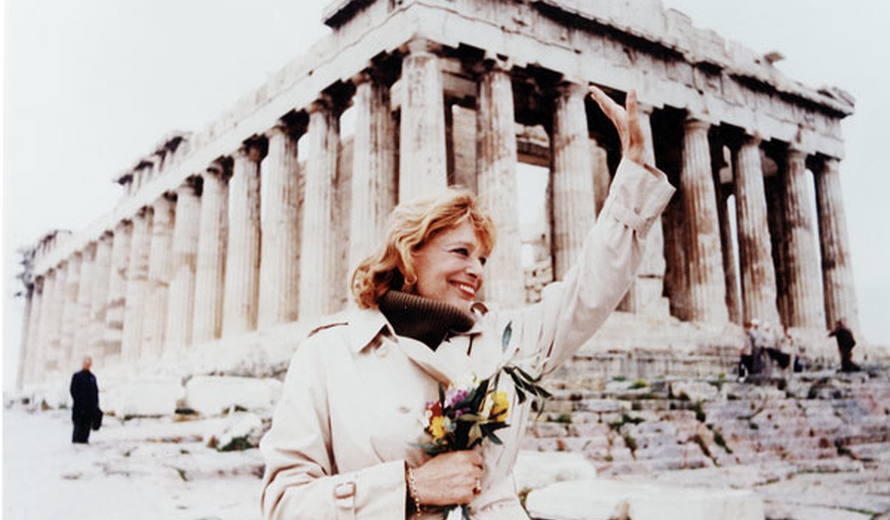
This programme, originally known as the “European City of Culture”, was championed with determination by an extraordinary figure: the Greek singer, actress and Minister of Culture, Melina Mercouri. Forty years later, the “European Capitals of Culture” have become one of the European Union’s most emblematic cultural initiatives. More than sixty cities have already received this designation, which has profoundly transformed historic metropolises such as Athens, Florence and Paris, as well as industrial cities in decline such as Glasgow, Lille and Liverpool. Behind this success lies a dual reality: on the one hand, cultural democratisation and urban revitalisation; on the other, processes of real-estate speculation, mass tourism, and sometimes social marginalisation. What does the history of the European Capitals of Culture reveal about the enduring tensions between the European cultural ideal and economic logic? To what extent has this initiative contributed to strengthening the European project?
The origins of the project: a committed greek artist and minister
The origins of the programme are inseparable from the personal trajectory of Melina Mercouri. Born in Athens on 18 October 1920 into a politically engaged family, she became one of the leading figures of Greek and international cinema during the 1950s and 1960s. Her performance in Jules Dassin’s film Never on Sunday, which won recognition at the Cannes Film Festival in 1960, brought her worldwide fame. Yet Mercouri was also deeply shaped by the political history of modern Greece. After the colonels’ coup d’état in April 1967 and the dictatorship that followed, she became an outspoken opponent of the military regime that ruled the country until 1974. Stripped of her Greek citizenship by the junta, she conducted an international campaign from exile in support of democracy’s restoration.
When Greece’s democratic transition took place and the socialist party PASOK, led by Andreas Papandreou, came to power in 1981, Melina Mercouri was appointed Minister of Culture. She remained in office until her death in 1994, becoming one of the most influential figures in European cultural policy during the 1980s. From the outset, she promoted a progressive vision of culture as a means of bringing European peoples closer together. In her view, the Europe built since the 1957 Treaty of Rome suffered from a lack of symbolic and cultural identity. Mercouri rightly argued that European integration could not rest solely on trade and institutions; it also required a shared cultural consciousness.
The Conception and realisation of the project: Athens 1985 as a political and cultural symbol
Against this backdrop, Mercouri proposed in 1983, during a meeting of European Ministers of Culture, the creation of an annual event designed to showcase the artistic richness of Europe’s cities. Her objective was twofold. First, she sought to familiarise Europeans with the continent’s diverse national cultures. Second, she wished to use culture as a diplomatic instrument to strengthen a still-fragile sense of European belonging. The proposal received favourable support, notably from the France of François Mitterrand and Jack Lang, who shared an ambitious vision of public cultural policy.
On 13 June 1985, in Athens, the Ministers of Culture of the European Economic Community officially established the “European Cities of Culture”. Athens naturally became the first designated city for 1985. The choice of the Greek capital carried strong symbolic significance, linking the democratic heritage of ancient Greece with contemporary European integration. The programme included archaeological exhibitions, concerts, performances of ancient drama, and international events intended to attract visitors from across Europe.
Expansion and institutionnalisation: a multifaceted success
Initially, the programme remained relatively modest. The first editions focused mainly on temporary cultural festivals. Athens in 1985 was followed by Florence in 1986, Amsterdam in 1987, West Berlin in 1988, and Paris in 1989. The Paris edition enjoyed exceptional visibility thanks to the bicentenary of the French Revolution. Yet the initiative soon acquired a much broader dimension. During the 1990s, the European Capitals of Culture became genuine laboratories of urban transformation.
The example most frequently cited is Glasgow, designated in 1990. A major Scottish industrial city severely affected by deindustrialisation and mass unemployment during the 1970s and 1980s, Glasgow used the European label to reshape its international image. Significant public investments were made in the renovation of museums, concert halls, and public spaces. The city developed an urban marketing strategy centred on cultural creativity. The results were striking: tourist numbers increased substantially, and Glasgow became a model of post-industrial regeneration through culture.
This logic of urban renewal continued in subsequent decades. Lille, European Capital of Culture in 2004, provides another major example. A former textile centre hit hard by industrial decline, the city under the leadership of Martine Aubry mobilised more than €70 million to transform its image. Hundreds of cultural events were organised throughout the Nord–Pas-de-Calais region, attracting nearly nine million visitors according to official estimates. The project helped strengthen Lille’s economic attractiveness and accelerated the renovation of several urban districts.
From Glasgow to Marseille: a remarkable enthusiasm
The European programme gradually expanded on a considerable scale. In 1999, the European Union officially adopted the title “European Capital of Culture”. Since then, several cities have been selected each year according to a rotation among member states. Over forty years, more than sixty cities have received the designation, including Lisbon (1994), Avignon (2000), Liverpool (2008), Marseille (2013), Matera (2019), and Eleusis (2023). Budgets vary greatly from one city to another, but some editions have generated investments worth several hundred million euros from both public and private sources.
The programme’s success rests largely on its economic impact. In many cases, European Capitals of Culture have led to significant increases in tourism. Liverpool, for example, welcomed nearly ten million additional visitors during its cultural year in 2008. Marseille, European Capital of Culture in 2013, attracted more than eleven million cultural visits and benefited from investments estimated at approximately €660 million in urban and museum infrastructure. More than 900 artistic events were organised between January and December 2013 across a territory encompassing ninety-seven municipalities, from Arles and Aix-en-Provence to Martigues, Aubagne and Salon-de-Provence.
The event was especially significant for the spectacular transformation of Marseille’s waterfront. The Vieux-Port was completely redesigned by the British architect Norman Foster, with partial pedestrianisation, the removal of numerous traffic lanes, and the installation of the mirrored canopy that has become one of the city’s contemporary landmarks. Most importantly, the opening of the Museum of European and Mediterranean Civilisations (MUCEM), inaugurated on 7 June 2013 and designed by architect Rudy Ricciotti, permanently altered the cultural image of the city. Connected to Fort Saint-Jean by a footbridge, this perforated black cube overlooking the Mediterranean immediately became one of France’s most visited museums. Between June and December 2013 alone, it welcomed more than 1.8 million visitors, including around 600,000 to its exhibitions. It represented a major success and a powerful enhancement of France’s oldest city, founded more than 2,600 years ago by Greek settlers from Phocaea, and often burdened by a negative reputation linked to crime, delinquency, urban decay, and drug trafficking.
Criticism and potentially perverse effects
However, this economic success has also generated significant criticism. Numerous scholars and urban planners have denounced the growing instrumentalisation of culture in the service of place marketing and competition among European cities. In some cases, large-scale investments aimed at tourists and affluent middle classes have accelerated the gentrification of historic city centres. In Liverpool, Marseille, and Matera, rising property prices following designation have generated considerable social tensions. Residents have sometimes criticised the transformation of cities into cultural showcases aimed primarily at international visitors rather than local populations.
The programme has also been criticised for promoting cultural homogenisation. Whereas Melina Mercouri originally sought to celebrate the diversity of European cultures, some observers argue that European Capitals of Culture increasingly produce similar urban models based on creative industries, flagship cultural institutions, and event-driven tourism. Candidate cities often multiply spectacular projects in order to attract investors and visitors, sometimes at the expense of more modest local cultural practices.
Greece itself, the programme’s founding country, illustrates this contradiction. When Eleusis obtained the title for 2023, organisers sought to highlight the industrial and working-class history of this long-marginalised suburb of Athens. Yet Greece’s economic difficulties, exacerbated by the financial crisis of the 2010s, limited the project’s initial ambitions. Several events had to be reduced in scale or postponed because of insufficient funding.
A positive contribution to the visibility of peripherical and crisis-stricken regions
Forty years after its creation, the overall assessment of the European Capitals of Culture remains highly significant. Few European cultural programmes have achieved such international visibility. The initiative has strengthened cultural cooperation among European states, supported the regeneration of numerous cities, and made culture a central component of contemporary urban policy. It has also enabled certain peripheral or economically struggling regions to regain international visibility.
Yet Melina Mercouri’s legacy extends far beyond tourism or economic development. Through her 1985 initiative, the Greek minister sought above all to remind Europeans that Europe could not be reduced to a common market, but must also be grounded in a shared culture that is at once common, diverse, and plural. This vision remains highly relevant today, at a time when the European Union faces major identity, geopolitical, and social challenges.