Giuseppe Sacco
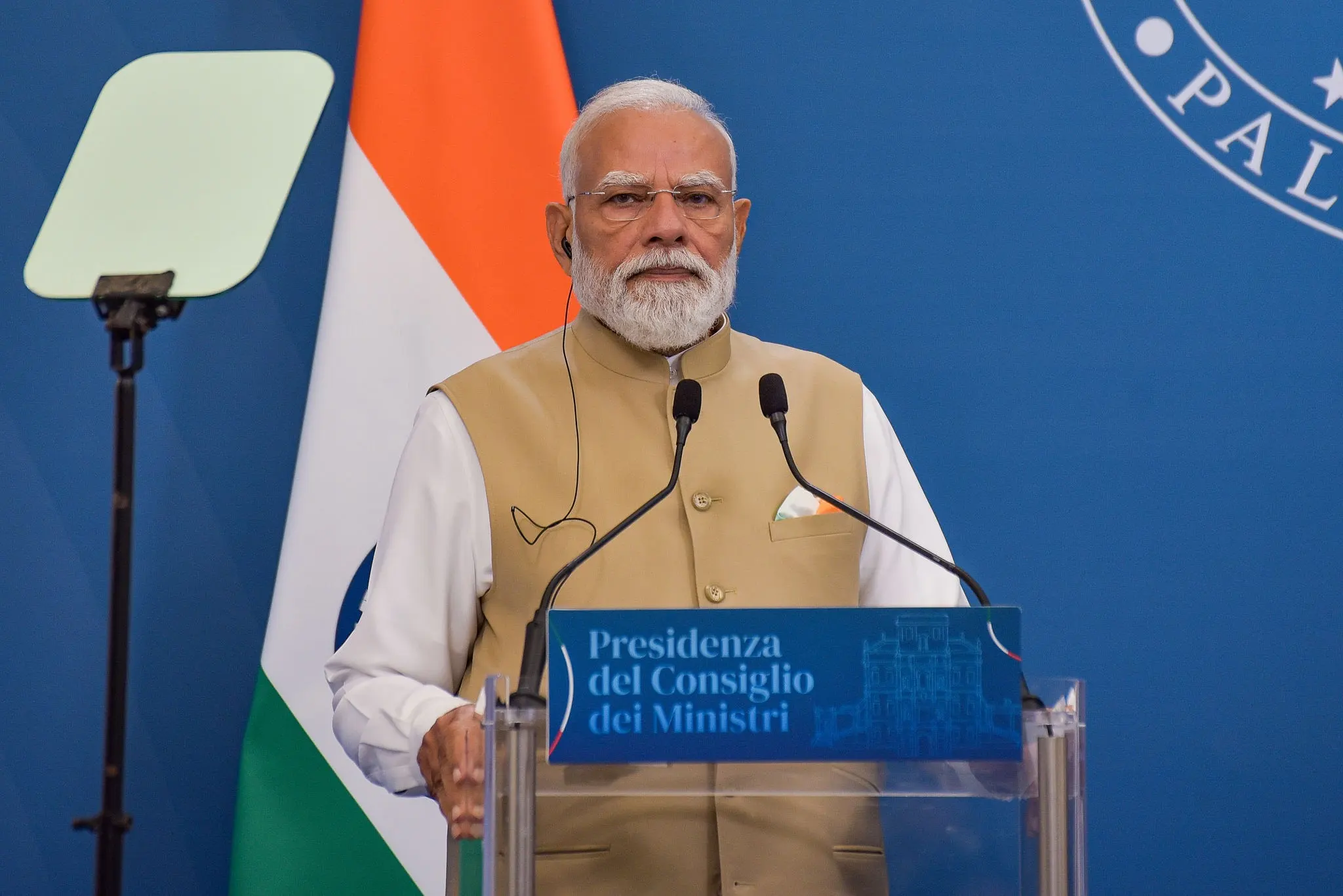
On the eve of 4 July 2026 — the 250th anniversary of the founding of the United States, which somewhat diverted international attention from events elsewhere in the world — the 16th India-Japan Annual Summit concluded in New Delhi. The signing closed not only an agreement on Japanese investment in India worth a total of 12.5 billion US dollars, but also 120 cooperation agreements across numerous advanced sectors, foremost among them electronics. This is how what is now being called a “semiconductor corridor” was also born.
Indians have given a telling name to the industrial policy strategy underpinning cooperation with Tokyo: “China Plus One.” A name that immediately calls to mind the channels of international collaboration between China and other Asian countries, as well as the famous Silk Roads. The visit to India by Japanese Prime Minister Sanae Takaichi — a woman, for the first time in the history of modern Japan — thus appears as a clear attempt to imitate China’s international growth strategy, not only in the industrial sphere but also geopolitically, by positioning Tokyo and Delhi against Beijing.
This is not yet a tectonic shift in the Indo-Pacific’s geopolitical and industrial balance. However, the creation of a “semiconductor corridor,” set within a complex triangulation between Japan, India and China, is enough to suggest an attempt to set in motion a strategic manoeuvre that, if pursued further, could come to be seen as one of the most significant developments of recent years in the Far East.
India’s “China Plus One” strategy
The “China Plus One” strategy is no longer simply a matter of diversifying supply chains to reduce India’s dependence on the Chinese market — a factor that became clearly apparent during the pandemic and was later sharpened by repeated US-China trade tensions. In the talks between Prime Minister Modi and Japanese Prime Minister Sanae Takaichi, it at times took on the tone of genuine power politics.
This concerns, first, a possible new role for Tokyo. Japan, which has historically maintained a complex relationship with China on military, political and industrial fronts, is shifting capital and technological know-how — particularly in semiconductors and advanced materials — toward India. India, in turn, can offer what is beginning to run short in China, or what has become too costly there: a young, vast and growing workforce, paired with a rapidly expanding domestic market.
India is not simply accepting investment; it is seeking to replicate the export and foreign-investment-driven development model that made China “the workshop of the world.” Observers who see a resemblance to the Silk Roads are not mistaken. By turning toward China’s perennial rival, India is seeking to build a network of infrastructural and industrial influence that, in its ambitions, should place it at the centre of a new Asian axis.
The “semiconductor corridor” as a geopolitical weapon
The semiconductor sector has often been described as “the oil of the 21st century.” That is a definition with an element of truth to it. Whoever controls the value chain — from design to production to advanced packaging — holds the power to shape the global economy.
For both parties, this is above all a matter of strategic autonomy: for Japan, tying itself to India means bolstering part of its national security away from direct pressure from Beijing. The signing of the 120 agreements represents not merely an economic operation but also a political signal — a still-embryonic challenge to Chinese hegemony. It shows how India is positioning itself as a credible alternative to China for multinational companies wishing to produce in Asia without being wholly subject to the political dynamics of Beijing.
Human capital: a strategic asset
There is also another factor at play. In presenting itself as a rival, India is playing on several fronts at once. Even as it seeks to emulate China’s success, it will for a long time have to balance its ambitions as an emerging superpower with the need to maintain stable trade relations with China itself, which remains an indispensable economic partner. The “China Plus One” strategy thus becomes a bargaining tool: the more India integrates technologically with Japan and the West, the greater its leverage against Beijing will be.
In short, 2026 — the year of the 250th anniversary of the United States — could come to be seen as the moment of a geopolitical handover at the heart of Asia. India is not content merely to imitate China; it is seeking to become Asia’s new technological pole by capitalising on the quantitative limits of China’s human resources.
Those limits, moreover, are not purely quantitative. Looking at the Asian-origin workforce employed in the West’s most advanced sectors, one finds a strong presence of professionals from the Indian cultural sphere, now nearly on a par with that of Chinese professionals. This is unsurprising given India’s very ancient astronomical and mathematical traditions.
The competition between India and China is thus being played out not only in factories or ports, but also in a genuine global war for talent, in which academic and scientific training plays a decisive role. The fact that India is closing the gap with China in this area is no accident, but the culmination of a specific historical and cultural trajectory.
Cultural foundations: a heritage in astronomy and mathematics
India possesses a millennia-old intellectual tradition that laid the groundwork for modern science, particularly in mathematics. From decimal numerals — later transmitted to Europe by the Arabs, along with the fundamental introduction of zero — to the Kerala school of mathematics between the 14th and 16th centuries, which anticipated certain concepts of infinitesimal calculus, Indian thought has always been oriented toward abstraction and computational logic. Its contribution to astronomy was likewise essential: observation of the sky was tied not only to navigation or agriculture but to a complex organisation of time and space that demanded, for centuries, extraordinary precision in calculation.
This heritage was transformed, over the 20th and 21st centuries, into a culture of excellence in engineering and computing. From the end of the colonial period onward, India — notably through the British-inspired network of Indian Institutes of Technology (IITs) — had already begun training a world-class technological elite, naturally fluent in English, today the lingua franca of science.
Industrial strategy or geopolitical ambition?
One might ask whether the “semiconductor corridor” announced during Prime Minister Sanae Takaichi’s visit represents a concrete industrial commitment or merely a diplomatic signal.
As for the 120 agreements signed, there is no doubt that they concern production, supply-chain integration and investments worth several billion dollars. But the strategic message sent by the “semiconductor corridor” also constitutes a strong signal, one China will not fail to take note of. The initiative underscores Japan’s effort to diversify the production of critical technologies away from China.
As has also been emphasised on the Indian side, by combining Japanese manufacturing experience with Indian talent in design and engineering, the two countries aim to develop a semiconductor supply chain for advanced chips that does not depend on China. The roadmap includes joint research and development on chips specifically designed for artificial intelligence (GPUs), reflecting an ambition to reduce dependence on Western technology for hardware components dedicated to artificial intelligence.
As for the challenges ahead, Indian officials appear well aware that, despite the current momentum, significant obstacles remain. India must resolve issues that, in the local context, are less straightforward than they appear — such as guaranteeing an extremely stable electricity supply and the availability of ultrapure water, both essential to semiconductor production.
Furthermore, concrete results will take time. Not only because building a semiconductor plant and its associated chemical facilities typically takes between three and five years, but also because the agreements signed in New Delhi concern mainly materials and packaging rather than the manufacture of cutting-edge chips below 7 nanometres. Chinese production, by contrast, is now approaching 2 nanometres — two billionths of a metre.
First publication: www.politicainsieme.com (July 5, 2026)