Chloé Maurel
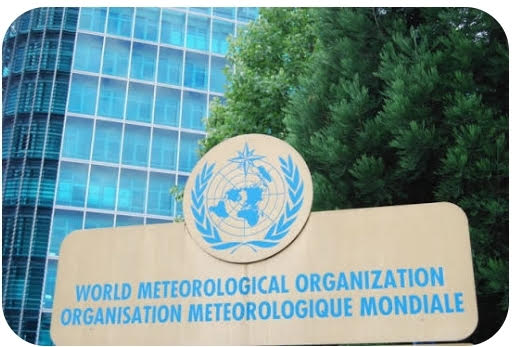
Created in 1950 and bringing together 187 Member States today, the World Meteorological Organization (WMO) is one of the specialized agencies of the United Nations. As the successor to the International Meteorological Organization, founded in 1873, it now brings together almost all the countries of the world around an essential mission: coordinating international cooperation in the fields of meteorology, climate, hydrology and atmospheric observation. Its role is to ensure the rapid exchange of meteorological data, establish common scientific standards, develop early warning systems and provide essential expertise for understanding climate change.
This international cooperation has become a global public good. Weather forecasts issued every day in every country rely on a continuous exchange of information between national meteorological services. Satellites, ground stations, ocean buoys, radars and numerical models feed into a vast network coordinated by the WMO. No State, however powerful, could produce reliable forecasts on a planetary scale on its own. Meteorology is, by nature, a science of cooperation.
Beyond daily forecasts, the WMO plays a major role in advancing knowledge of climate change. Every year, it publishes a reference report on the state of the global climate, which is regarded as authoritative by both researchers and public decision-makers. It also coordinates several international observation programmes covering the cryosphere, oceans, precipitation and greenhouse gases. Its work directly contributes to the assessments of the Intergovernmental Panel on Climate Change (IPCC), jointly established by the WMO and the United Nations Environment Programme (UNEP) in 1988. Without this global scientific infrastructure, it would be impossible to accurately measure the current acceleration of global warming.
Yet the WMO remains insufficiently known by the general public. For example, few people are aware of the “World Weather Watch” programme launched in 1963, the “Tropical Cyclone” programme initiated in 1971, the “Operational Hydrology” programme started in 1972, or the Vienna Convention for the Protection of the Ozone Layer (1985), followed by the Montreal Protocol on Substances that Deplete the Ozone Layer (1987). These agreements have been highly effective in helping to halt the expansion of the famous “hole” in the ozone layer.
The WMO also includes eight technical commissions working on specific practical areas, such as aeronautical meteorology and agricultural meteorology.
However, the WMO, which has been led for the first time by a woman since 2023 Argentine meteorologist Celeste Saulo, remains politically underused. As heatwaves become longer, more frequent and more deadly, its role could be considerably strengthened. Heatwaves now cause tens of thousands of premature deaths every year, particularly affecting older people, exposed workers, young children and the most vulnerable populations. Health impacts are compounded by economic consequences: declining agricultural yields, large-scale wildfires, water shortages, energy disruptions and ecosystem destruction.
Faced with the growing number of crises, the WMO could become the true global coordination centre for heatwave adaptation policies. It could develop international guidelines for national prevention plans, harmonize criteria for triggering alerts, coordinate the exchange of experiences among States, develop global vulnerability indicators and promote best practices in urban planning, water management, public health and worker protection. Its scientific expertise could provide greater guidance for international political decisions.
The “Early Warnings for All” initiative, launched under the auspices of the United Nations and largely led by the WMO, already represents an important step forward. Its objective is to ensure that every person on Earth benefits, within the coming years, from an early warning system against weather-related disasters. However, this ambition requires much greater funding. Even today, many low-income countries lack sufficiently effective observation networks and meteorological services capable of efficiently anticipating extreme events. This inequality is profoundly unjust: the countries that have contributed the least to greenhouse gas emissions are often those most vulnerable to the consequences of global warming.
This is precisely where global governance becomes fully meaningful. Climate is a planetary common good. Air masses, oceans and greenhouse gas emissions move without regard for political borders. The heatwaves currently affecting Europe are part of global atmospheric dynamics that simultaneously affect other continents. The belief that each State could solve this crisis on its own is an illusion. International cooperation is a scientific necessity.
The United Nations remains the only international organization with truly universal legitimacy to organize such cooperation. Its specialized agencies, each within its own area of expertise, form a unique architecture of global governance. The WMO represents one of its scientific pillars. Its action should, however, be more closely coordinated with that of the World Health Organization (WHO), UNESCO, the Food and Agriculture Organization (FAO) and the United Nations Environment Programme (UNEP). Heatwaves are not merely a meteorological phenomenon: they are also a health, agricultural, educational, economic and social crisis.
Giving this organization the means to fulfil its ambitions also requires strengthening its funding, which is currently far too limited: today, global military expenditure represents 34,000 times the annual budget of the WMO!
Its political authority must also be strengthened. Its recommendations should be more fully integrated into international climate negotiations and national adaptation policies.
The history of the United Nations shows that major global crises have often led to the strengthening (or even the creation) of international institutions. The growing frequencies of heatwaves could become one of those decisive moments. Faced with a climate that ignores borders, international solidarity becomes a condition for survival. More than ever, the response must be global, based on science and ecology, organized by multilateral institutions and guided by a fundamental principle of equality and fraternity among peoples. States would benefit from considering the WMO not as a mere technical body, but as a genuine global public good serving collective security.