Eric Djabiev
Erasing the affront of a century of humiliation
How can Chinese power reconcile its will to power and its assertiveness in international relations with the potential weakening of its army?
First of all, China’s will to power has never been stronger. The driving force behind it remains just as powerful: erasing a century of Western colonial humiliation. As an aside, a prominent French politician, who is nonetheless a candidate in the 2027 presidential election, has claimed that colonisation was a positive thing, just as a French president did in 2012…
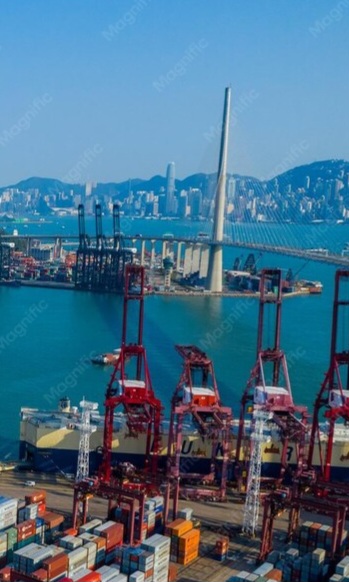
To understand the intensity of this humiliation, it must be recalled that China was, for 2,000 years, the world’s foremost power. This colonial humiliation at the hands of the West began in 1840 with the British, who sought to force the Chinese Empire to buy their surplus opium from India. This marked the start of the Opium War, during which the British navy crushed the imperial army, which was vastly inferior technologically. China had been closed to trade with the West. The colonial West forced the Chinese Empire to sign unequal, humiliating treaties. Britain took control of the port of Hong Kong. For the Chinese, this was the “century of humiliation,” which came to an end with the founding of the People’s Republic of China in 1949. Nineteenth-century China was overtaken by the West, both economically and militarily, because it failed to embrace the Industrial Revolution, unlike Japan.
The determination to wash away this age-old humiliation is today the driving force behind the assertive geopolitical actions of the People’s Republic of China. On the world stage, China wants to present itself as committed to peace and stability.
The strategy China has adopted is heavily influenced by its greatest strategic theorist, the third-century BC thinker Sun Tzu. His work, The Art of War, is a treatise on strategy unmatched except perhaps by Clausewitz and Machiavelli. Indeed, Xi Jinping draws on it as a guiding text. The aim is to win without fighting, using every means available short of war wherever possible — winning through cunning, deception, secrecy, intelligence and patience. Direct confrontation must therefore be avoided above all.
Geopolitically, China presents itself as a power that brings peace and stability, not aggression. On Taiwan, for instance, patience is the rule: Beijing is multiplying its political influence in order to help the pro-Beijing opposition win the next presidential election in 2028. This is why the leader of the pro-China opposition was recently received in Beijing.
Given the crisis within China’s military institution, Beijing has become less bellicose, having for now abandoned its violent rhetoric accompanied by threats and intimidating military manoeuvres. The current fallback position rests on the notion of a potential blockade, with the idea being spread of a blockade of the island carried out more by the coast guard than by the Chinese navy.
Given Taiwan’s economic role in the most advanced semiconductors, and its continued, unthreatened global lead in the short term, the United States is in no hurry to abandon the island to Beijing.
The entire highly successful American AI industry depends entirely on Taiwan and its company TSMC. TSMC still dominates the market for the most powerful chips, which are indispensable for AI. Taiwan has managed to preserve its “silicon shield,” which protects it.
For now, Chinese power does not wish to become the world’s foremost superpower. It believes a duality of power at the head of the world is preferable. This idea of Xi Jinping’s was rejected by Biden, as it has been by other US presidents. The United States wants to dominate the world without sharing that role, with its NATO allies always serving as a supporting force.
To become the world’s leading economic power, the Chinese regime is waging an economic war primarily against the United States, but also against the EU. Chinese industrial success was on full display at the recent Hannover industrial fair in Germany. Of 4,000 exhibitors, China was represented by 1,145 companies, Germany by 1,263, the United States by 100, and France by only 35.
The strengths of the Chinese economy lie in the digital revolution: AI, robotics, batteries (the fastest to recharge), electric vehicles (50% of the fleet), solar panels (90% of the world total) and wind turbines (100% of the world total). The strength of this industrial base rests on planning concentrated on high-technology industries. This planning is both military and civilian, backed by enormous financial resources from the Chinese state. This power rests on a large network of engineering schools and on control over rare earths, both in extraction and refining.
Planning is a core element of Chinese economic power. It governs the control and security of China’s supplies and exports via the new Silk Roads, the “Belt and Road Initiative” (BRI). These routes, which cross Central Asia, are playing an increasingly important role in the context of the confrontation with the United States. They pass mainly through Kazakhstan and Turkmenistan, starting from China’s Xinjiang province, which plays a major geopolitical role.
For now, this route ends in Tehran. The overland journey takes 14 days, compared with 40 days by sea. This rail corridor is in constant expansion, using container trains a kilometre long. A daily train is being planned for the near future.
Iran is indispensable to China; it is the “golden gate.” It serves as the outlet for most of these routes. From there, passing through Turkey allows access to the EU. But the section meant to link Tehran to Turkey has barely begun.
The war around the Strait of Hormuz reinforces China’s assessment of the fragility of maritime routes. Ever anticipatory — one of China’s great strengths — these overland routes have been under construction for more than a decade. Coincidence or not, Iran was set to see these routes arrive in force in 2026, with a sharp increase in rail traffic.
The US war against Iran poses a threat to most of these routes. The United States has emphasised the threat of destroying Iranian bridges. It is clear that this war also aims to weaken China, both in its oil supplies and along its Silk Roads.
China wants to weaken the West geopolitically by relying on the coalition of the “new Gang of Four,” its true power base, as well as on the Global South, particularly the “BRICS Plus.” This is why a Russian failure, or its collapse, would seriously weaken China.
The Russian economy is currently in serious difficulty. In theory, however, international law is upheld by Beijing, which is calling for reform of the Security Council in favour of the Global South. The aim is not to challenge or jeopardise the UN, as Trump is doing, but to try to reform it.
Building closer ties with the BRICS and the Global South more broadly is likewise essential, pursued gradually and with patience. The aim is to rally the entire Global South around the People’s Republic of China, which presents itself as the spokesperson for opposition to an unequal world order. It denounces a world order dominated by the West — both the postcolonial European order and the post-imperialist American one.
Rapprochement with the Global South is also economic: the creation of a new common currency, still in its embryonic stages, and of a new world bank to rival the World Bank.
Chinese power does not wish to become the new global superpower in place of the United States. Historically, that would require worldwide military commitment, akin to that of the United States today. There remains a persistent fear tied to China’s own vulnerabilities. Becoming the world’s leading economic power, on the other hand, would consolidate the Chinese state.
In the shadow war — both geopolitical and economic — being waged between the world’s two leading powers, China is currently winning. On the economic front, control over rare earths is a major asset. For now, only American AI seems able to hold its own against China.
Geopolitically, Trump’s current policy is weakening the Western camp by multiplying attacks on its own allies. Finally, the outcome of the war waged against Iran has been negative for the United States. Once again, asymmetric warfare has shown its strengths against a great power that, overconfident, in effect embarked on a perilous adventure.
The strategic weakness is real: an inability to grasp the resilience of a country with a millennia-old history and a genuine civilisation of its own, despite the terrible repression the Shiite regime inflicts on its own people.
There is a complete failure to understand the very strong ties among these four totalitarian regimes gathered around the Chinese regime. Iran has received decisive aid from its allies, and, thanks to the new Silk Roads linked to China, the overland routes are enabling Iran to withstand the blockade.
This geopolitical sequence marks an important stage in the weakening of the Western camp against a China that is winning. China, thanks also to its capacity for anticipation, had prepared itself for a blockade of the sea lanes.
Xi Jinping wants to go down in his country’s history as the first leader to have begun the “century of humiliation of the West” — one meant to wash away the affront of the century of humiliation the Chinese nation endured at the hands of Western colonial practices.
(End of episode 2/2)