Francesco Segoni
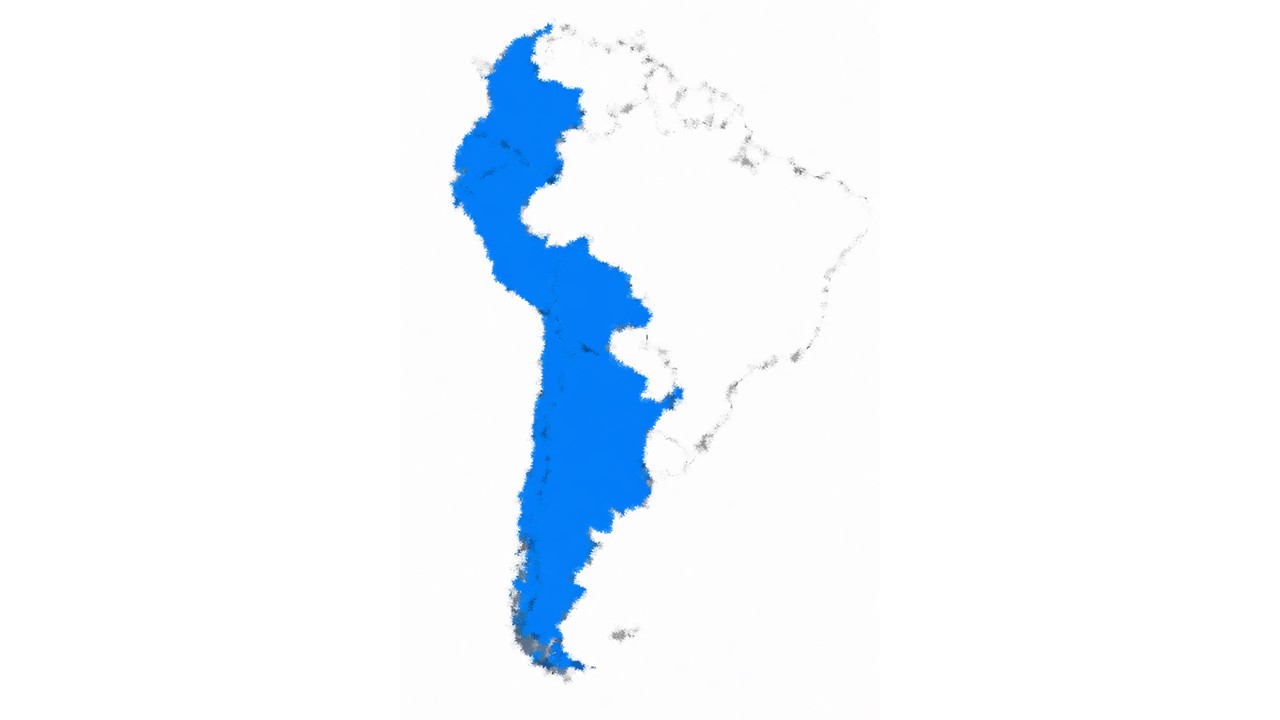
Within just a few years, South America’s political map has changed radically. After the cycle of the so-called second pink tide, inaugurated by Gabriel Boric’s victory in Chile (2021), Gustavo Petro’s in Colombia (2022) and culminating in Luiz Inácio Lula da Silva’s return in Brazil (2022), the continent has done an about-face, at least electorally. Between 2025 and 2026, Bolivia, Chile, Peru and Colombia all chose centre-right or right-wing governments, falling in line with Daniel Noboa’s Ecuador and Javier Milei’s Argentina, the pioneers of this reversal.
The picture is by now fairly clear. In Bolivia, the long hegemony of Evo Morales’s and Luis Arce’s Movimiento al Socialismo was broken by the victory of Rodrigo Paz, representing a pragmatic, business-oriented centre-right. In Chile, José Antonio Kast brought the muscular, Pinochet-nostalgic right back to La Moneda after Gabriel Boric’s progressive cycle, leaning above all on security and immigration control. In Peru, the return of Fujimorismo with Keiko Fujimori, daughter of former president Alberto, marked one of the region’s most striking political comebacks, after three consecutive presidential defeats. In Colombia, conservative Abelardo de la Espriella narrowly defeated the left represented by Iván Cepeda, closing out the first national government experiment by Colombian progressivism under Gustavo Petro.
One might be tempted to read these results as the pendulum’s natural swing: the vote as an inevitable, predictable reaction to the wear and tear of power, which erodes support and accumulates disappointed expectations. More likely, however, we are witnessing the manifestation of a more structural crisis: a combination of economic downturns, a deterioration (real or perceived) in public security, a loss of trust in institutions, and a growing demand for state effectiveness. The “new South American right” is not a compact ideological bloc; it is a multiplicity of distinct political forces, united by their ability to tap into demands that had gone unanswered.
The first common thread linking these countries is precisely the issue of security and public order. This is hardly new: Latin America has for decades been the world’s most violent region in terms of intentional homicides, drug trafficking is a metastasis spreading through transnational networks, extortion schemes are growing ever more sophisticated, and porous borders with guerrilla movements feed and reinforce both phenomena. Outgoing governments are simply being blamed for not having taken the issue seriously enough, or not seriously enough.
In Colombia, the partial failure of Gustavo Petro’s “Paz Total” reinforced the perception that the state was losing control of large swathes of territory. In Peru, the explosion of extortion and urban crime became the central theme of the election campaign. In Chile, a country traditionally seen as one of the region’s safest, rising homicide rates and the arrival of international criminal organisations produced a psychological shift even before a statistical one. Even in Bolivia, where security concerns remained less central than the economic crisis, the strengthening of drug-trafficking networks contributed to a sense that the state was less capable of exercising its monopoly on the use of force.
These are dynamics well known beyond the region. Even in Europe, in an objectively far less violent context, security has become one of the determining factors of electoral behaviour. And just as Europe’s populist right points to boats crossing the Mediterranean as a variable in the same security equation, the growing number of Haitians and Venezuelans on the streets of Bogotá and Santiago is being wielded as a rhetorical weapon by forces promising order and control.
Security does not explain everything, however. The second major common factor is the crisis of governability. All four South American countries mentioned have, in recent years, faced growing difficulty in producing effective institutional decisions. Bolivia went into its elections after the devastating internal rupture within the Movimiento al Socialismo between Evo Morales and Luis Arce, which dissolved the political system that had, more or less, held together for twenty years. In Colombia, the Petro government ran into enormous difficulties implementing its reform agenda, while in Chile Gabriel Boric clashed with a highly fragmented political system and the failure of the constitutional process. The severity of Peru’s institutional collapse is evident in the numbers: eight presidents in the past ten years, three of them impeached, two persuaded to resign to avoid impeachment proceedings, and a sixth who faced a parliamentary censure motion.
Voters in these four countries do not appear to have rewarded economic programmes or more conservative socio-cultural positions so much as, or only, candidates perceived as “efficiency-driven”: practical figures more than strongmen. The prevailing political demand is not so much “less state” (as with Republicans in the United States) as “a state that works.” It is on this point that the most important differences also emerge.
In Bolivia, the vote represented above all the end of the MAS’s long cycle under Evo Morales. The economic crisis — marked by the exhaustion of the model built on natural gas rents, a shortage of foreign currency, and the paralysis produced by the Arce-Morales feud — made an alternation of power inevitable that would have seemed unthinkable just a few years earlier.
In Chile, by contrast, the dynamic is almost the reverse. The economy remains relatively solid by regional standards, while the decisive factor was a redefinition of voters’ priorities following the cycle opened by the 2019 protests. Where the debate back then was dominated by inequality, social rights and a new constitution, by 2025 public security and immigration had become the leading concerns.
The right’s victory in Peru looks like an attempt to escape a permanent crisis of political representation. Voters had already rejected Keiko Fujimori three times over the past fifteen years. The message was clear: anyone but the daughter of former president Alberto, bearer of a surname synonymous in the country with clientelism, corruption and mafia-style methods of handling dissent. In the end, though, they resigned themselves to the idea that this name is also the only centre of gravity capable of offering stability. The return of Fujimorismo is less a sign of ideological nostalgia than a need to stop the merry-go-round at any cost.
Colombia, finally, is probably the most significant political test. For the first time, the left had democratically taken power at the national level; the conservative candidate’s 2026 victory does not erase that historic milestone, but it does signal the limits Gustavo Petro’s project encountered in translating an ambitious agenda of transformation into results perceived as concrete, particularly on the ground of security.
If a rightward shift does exist, then, it is not uniform. South America’s new leaders share certain priorities — security, immigration control, reviving private investment, fiscal discipline — but they emerge from differing political contexts. There is today no regional equivalent of the Washington Consensus, nor a new common ideological platform comparable to the first pink tide of the early 2000s. The real novelty of this rightward turn lies less in the return of conservatism than in the crisis of the political promises that dominated the last decade. The left often interpreted popular discontent as a demand for greater social justice; the right has managed to intercept that same discontent as a demand for order and security, winning support on the promise of restoring governability. The great remaining question mark is Brazil. The 2026 elections could further reinforce the presence of conservative governments across the continent, or they could confirm the Brazilian political system’s capacity to produce more complex equilibria. Either way, it would be premature to read the Brazilian vote as the final piece of an already-settled mosaic. Latin American political history teaches that electoral cycles are rarely linear.