Maurizio Donini
The Casus Belli of Abkhazia and South Ossetia
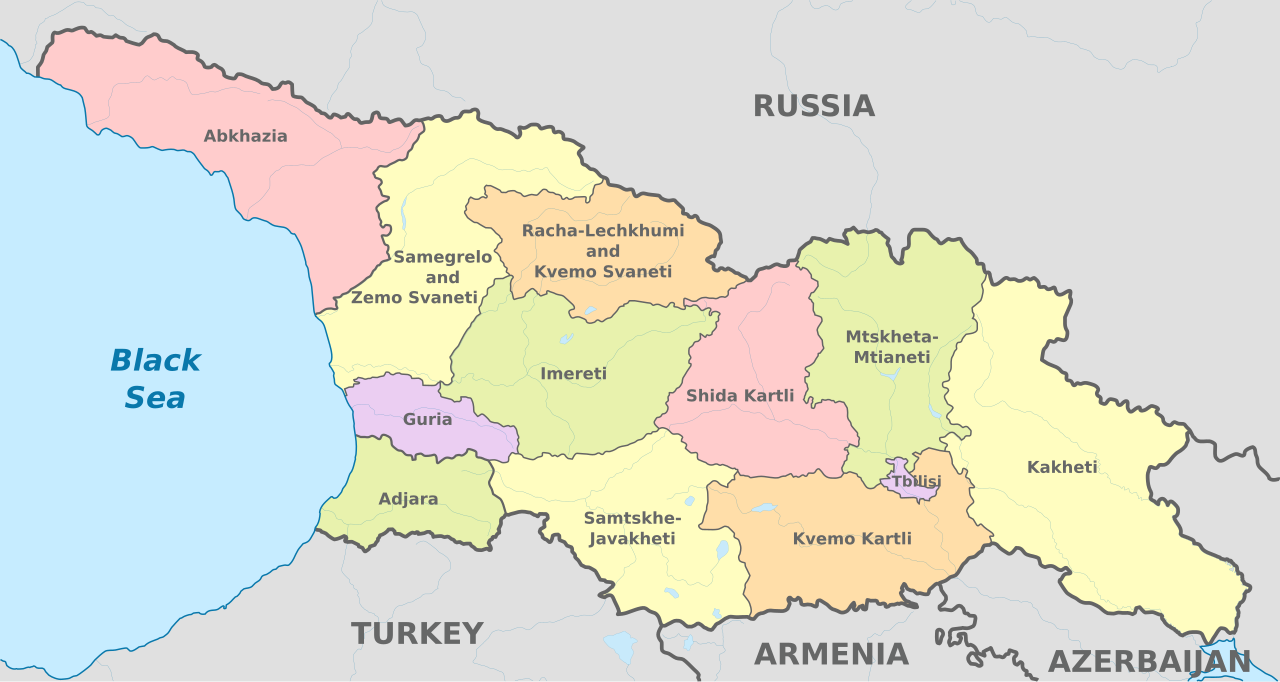
In the chaos of the Soviet Union’s dissolution and the birth of the Republic of Georgia, the status of the autonomous regions inherited from the Soviet legal order deteriorated rapidly: the autonomous oblast of South Ossetia and the Abkhaz Autonomous Soviet Socialist Republic (ASSR) rose up in bloody separatist wars seeking to break away from Tbilisi, while the third autonomous republic, Adjara, became a de facto local fiefdom outside central authority until its peaceful reintegration in 2004. Under the principle of uti possidetis juris (existing administrative boundaries become the international borders of the new state), however, both Abkhazia and South Ossetia remained an integral and inalienable part of Georgia’s sovereign territory.
The history of the two separatist regions constitutes a textbook case in public international law. The armed intervention ordered by Tbilisi in August 2008 to retake control of Tskhinvali could, from the standpoint of domestic constitutional law, be characterised as an operation to restore institutional order against rebel formations. Since it was directed against Georgia’s own province rather than against a third sovereign entity, the Georgian offensive could not, in principle, constitute a violation of the prohibition on the threat or use of force in inter-state relations enshrined in Article 2(4) of the UN Charter. Nevertheless, the large-scale use of regular forces against organised militias fell squarely within the category of a non-international armed conflict (NIAC), governed by Common Article 3 of the 1949 Geneva Conventions and by Additional Protocol II of 1977.
While under jus ad bellum the operation qualified as a legitimate exercise of domestic sovereignty aimed at restoring institutional order against rebel formations — despite breaching the truce commitments laid down in the 1992 agreements —, it was on the jus in bello front that the most serious concerns arose: bound by customary humanitarian law, Tbilisi engaged in the disproportionate use of heavy artillery against densely populated urban areas.
The nature of the crisis changed instantly with the deadly involvement of the Russian battalion of the Joint Peacekeeping Force (JPKF), deployed under the 1992 Sochi Agreement: the direct outbreak of hostilities between the regular forces of two sovereign states internationalised the conflict (IAC – international armed conflict). The forced crossing of the Roki Tunnel by Russia’s 58th Army constituted a material breach of Article 2(4) of the UN Charter. Moscow sought to justify the invasion by invoking self-defence under Article 51, in order to protect its peacekeepers and “Russian citizens abroad,” as well as the doctrine of the Responsibility to Protect (R2P). As the Tagliavini Report (2009) established, however, Russia’s military response plainly violated the principles of proportionality and necessity: the deep advance into undisputed Georgian territory (Gori, Senaki, Poti), the naval blockade of the Black Sea coast, and the permanent occupation constituted an act of aggression within the meaning of UN General Assembly Resolution 3314 (XXIX), subjecting the occupied areas to the regime of the Fourth Geneva Convention and the 1907 Hague Regulations.
In the face of such violations, the normative framework clashes with the inorganic structure of the international system, which lacks a central authority, is based on state consent, and has no automatic enforcement mechanism. In the Caucasian context, the adoption of binding coercive measures under Chapter VII of the UN Charter was precluded by the systematic use of the veto power exercised by the Russian Federation within the Security Council.
The multilateral response therefore focused on the United Nations General Assembly (UNGA), through the annual resolution “Status of internally displaced persons and refugees from Abkhazia, Georgia, and the Tskhinvali region/South Ossetia, Georgia.” Although falling within the sphere of non-binding recommendations (soft law), the repeated adoption of these acts by large majorities performs an essential function in the formation of customary international law (diuturnitas and opinio juris): it reaffirms the inviolability of Tbilisi’s sovereign borders, declares forced demographic changes null and void, and guarantees the inalienable right of internally displaced persons (IDPs) to return. In substantive terms, these resolutions consolidate the customary obligation of non-recognition (the Stimson Doctrine), depriving the occupation and local puppet regimes of any legal legitimacy and excluding the validity of de facto borders, passports, or bilateral agreements concluded by separatist authorities with third states.
UN General Assembly resolutions have provided solid legal grounding for supranational courts, which have used UNGA texts and voting records as documentary evidence of the international community’s practice and consensus. At the same time, third states imposing restrictive measures on Moscow — chief among them the European Union and the United States — base the legitimacy of their sanctions precisely on the manifest violation of the principles of sovereignty and territorial integrity reaffirmed within this multilateral framework.
In terms of human rights protection and state responsibility, the landmark ruling came from the Grand Chamber of the European Court of Human Rights in the case Georgia v. Russia (II) (2021). The Court distinguished the active phase of hostilities (8–12 August 2008)—considered a conventional military confrontation outside ordinary territorial jurisdiction—from the period following the ceasefire. For the latter period, the ECtHR held, with binding legal force, that the Russian Federation exercises continuous “effective control” over Abkhazia and South Ossetia, attributing direct responsibility to Moscow for systematic violations of fundamental rights: targeted killings, torture, arbitrary detention along the ABLs, destruction of civilian property, and the arbitrary denial of the right of return to Georgian refugees.
On individual criminal responsibility, the International Criminal Court (ICC) formally opened an investigation in 2016 into war crimes and crimes against humanity committed between 1 July and 10 October 2008. Although international law suffers from the absence of a universal enforcement apparatus, the ICC’s jurisdictional mechanism carries binding operational effects tied to territorial jurisdiction (Article 12 of the Rome Statute). Having ratified the Rome Statute in 2003, Georgia confers on the Court jurisdiction over crimes committed on its internationally recognised sovereign territory — including in Abkhazia and South Ossetia — regardless of the perpetrators’ nationality. The Russian Federation never ratified the Statute and, in 2016, withdrew its signature from the treaty following the characterisation of the annexation of Crimea as a military occupation. As a result, Moscow refuses any cooperation or extradition of its nationals. In December 2022, the ICC’s Pre-Trial Chamber issued international arrest warrants against three officials of the de facto South Ossetian administration — including the then-Interior Minister, Mikhail Mindzaev — and established the role of Russian general Vyacheslav Borisov (who died before the warrant was formally issued) in forced deportations and violence committed against civilians. The accused are liable to immediate arrest should they cross into any of the more than 120 states party to the Statute.
The situation looks different before the International Court of Justice (ICJ). Although membership of the ICJ Statute is automatic for all UN member states (Article 93 of the UN Charter), the Court’s contentious jurisdiction rests on the consensual principle of jurisdiction: neither Georgia nor Russia has made a declaration accepting the Court’s general compulsory jurisdiction (within the meaning of Article 36(2) of the Statute). An inter-state application is therefore admissible only under a specific compromissory clause contained in a multilateral treaty binding both parties — as in Tbilisi’s 2008 attempt based on the International Convention on the Elimination of All Forms of Racial Discrimination (ICERD), a claim the Court subsequently rejected on procedural grounds relating to the prior obligation to negotiate. This body of case law echoes the positions taken by European institutions: European Parliament resolutions and Council of the EU conclusions have consistently described the two regions as “Georgian territories illegally occupied by the Russian Federation,” aligning with the Parliamentary Assembly of the Council of Europe (PACE Resolution 1633/2008 and subsequent resolutions) and the OSCE in condemning the military occupation and “borderisation” practices as a structural violation of Georgian sovereignty.
(End of episode 2/3)