Piero Graglia
The European Union is a cold-blooded political animal when it comes to how it operates: countless technical details, a vast and complex institutional architecture, procedures and processes that are not immediately easy to grasp — and yet this cold-blooded animal is capable of stirring up wildly disproportionate passions, for or against, fuelling political rhetoric that all too often stops at appearances.
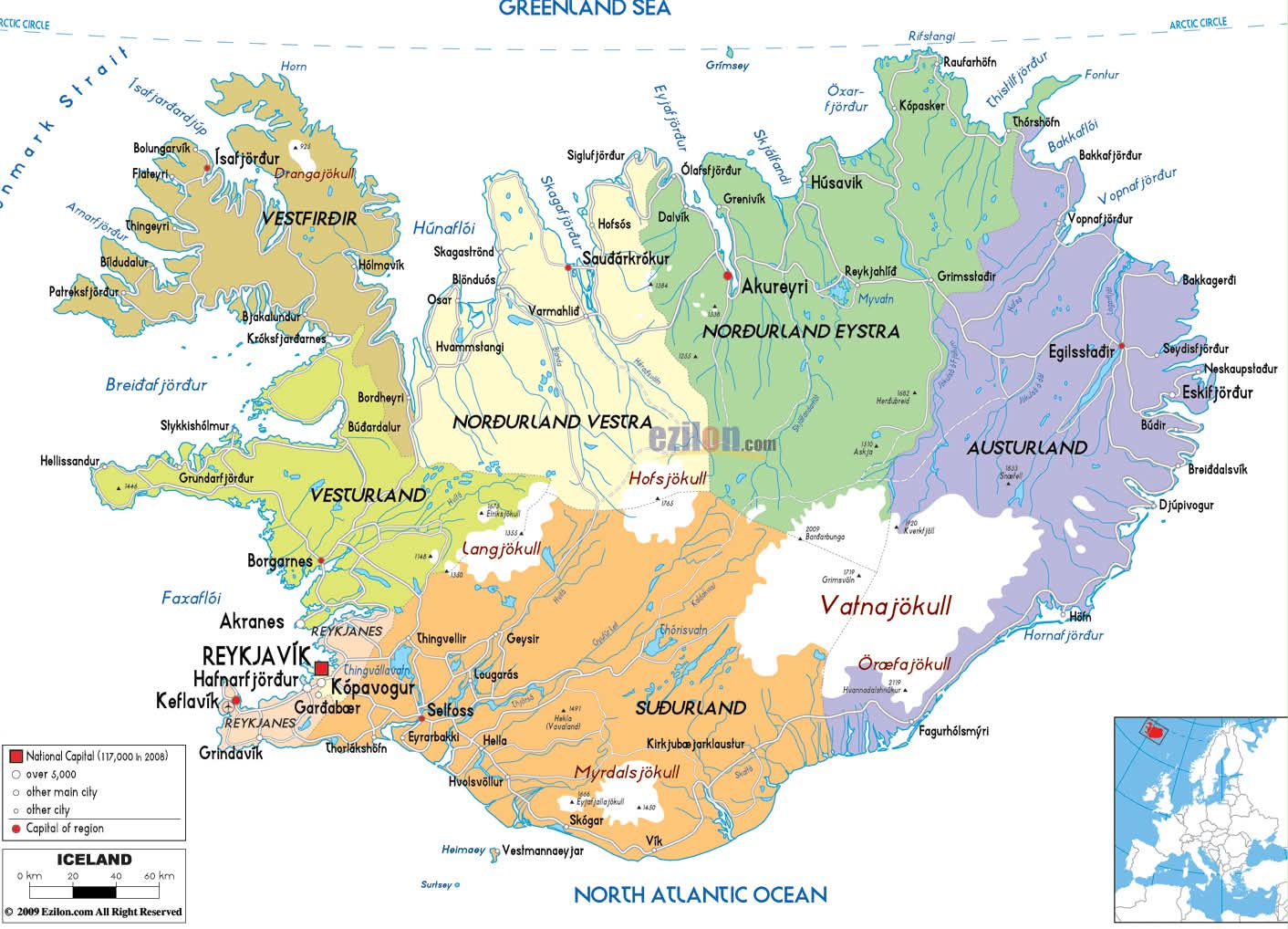
The latest case in point is the vote against reopening the accession process expressed by Icelanders a few days ago. This is an event concerning a country roughly a third the size of Italy (103,000 square kilometres), with a population of 397,000. Italy covers 301,000 square kilometres but has sixty million inhabitants. That alone should give a sense of what we’re actually talking about: not the accession of millions of people, but a country with as many inhabitants as the city of Florence, and roughly the land area of the Po Valley plus Emilia-Romagna.
It should also be noted that the vote was only meant to allow the reopening of negotiations toward a possible future accession (suspended in 2015, eleven years ago), and was not in itself a challenge to Iceland’s current relations with the Union, which remain what they are: deep and substantial on the economic and trade fronts, within the framework of the European Economic Area. That alone should lead the many voices now enthusing over this “no” vote to temper their judgment in light of the actual facts.
Iceland has not said “No” to the European Union: it wants to keep its relationship with the Union as it stands today, without changing it. So what exactly is that relationship?
The European Union currently absorbs 66% of Icelandic exports, made up mainly of fisheries products and raw materials. Trade is organised through the European Economic Area (EEA) system, a framework that includes all EU countries as well as those orbiting around it: Switzerland, Norway, Iceland, Greenland (an autonomous territory of the Danish state), and every neighbour that concludes association agreements with the EU.
Seen this way, what happened should not be stirring up such strong feelings. And yet we see the populist right jumping for joy and pro-Europeans in mourning. Much ado about nothing, as Shakespeare would have put it. Everything stays as it was, and it is entirely understandable that a geographically fairly large country, which draws much of its livelihood from fishing, would be wary of the prospect of sharing that resource on equal terms with half a billion Europeans.
Icelandic waters have no wish to open up to Spanish, German or French fishing fleets, and in this Iceland is repeating what happened with Norway in 1972 (at the time, Norway had just discovered oil in the North Sea and was adding that new wealth to its fishing reserves), as well as with other countries that judged it more advantageous, from a purely economic standpoint, not to turn their economic relationship into full membership.
Take note, however: Iceland has, de facto, been part of the European economic system since the very start of the European integration process. It takes part in shaping the rules that concern it, but not in the forums where those rules are actually voted on by the 27 current members of the European Union.
Its position thus amounts to opportunistic participation: it reaps the benefits of the European Economic Area and the single market without bearing all the constraints. It does, however, still shoulder the financial contributions tied to belonging to the “club,” just as Switzerland and Norway do, and as the United Kingdom will too, once the terms of its post-Brexit relationship with the Union are fully settled.
So jumping for joy on the benches to celebrate a triumph of independence is foolish, because what is triumphing today is not independence but interdependence. The real challenge in relations between the EU and the states orbiting its economic and trade space, while keeping a watchful distance, increasingly seems to be finding the most advantageous possible way of organising their relationship with “the club.”
If some politician looking for easy support wants to call this a “no” to the European Union, they’re welcome to. But to my mind, this is simply an economic calculation, while the commercial and “political” interest in sharing rules and regulations remains fully intact.
If we then look at the candidate countries, we find very similar processes and an identical approach: extracting the maximum possible advantage.
The Western Balkans, notably Albania, Kosovo and Montenegro, along with Ukraine, Georgia and Turkey, are all countries that, to varying degrees, maintain deep relations with the Union and organise them in ways judged, each time, to be increasingly advantageous both to themselves and to the Union.
This, we are told, is simply how democracy works: association agreements are struck each time, with very clear and precise guidelines describing each situation, with the terms negotiated jointly.
What is surprising, and mildly amusing, is the ignorance of the populists now ready to wave the flags of independence while pretending not to notice — or simply not noticing at all — the reality of the interdependence that the existence of the European Economic Area and the European Union has created across Europe and around it.
This is propaganda that finds a ready audience so long as one sticks to appearances — the “no to Europe” headline — but that turns out to hold no water whatsoever the moment one actually thinks the issues through instead of kicking the ball into touch.
Whether they like it or not, Salvini, Le Pen (and Meloni) will find that the real interdependence of the countries within this vast economic and social space that is Europe does not bear out their enthusiasm. It simply shows that the populists are living in another era altogether — that of “empires” or fully sovereign, wholly independent states — which is to say, a state of affairs that, today, no one can actually experience.