Pascal Boniface
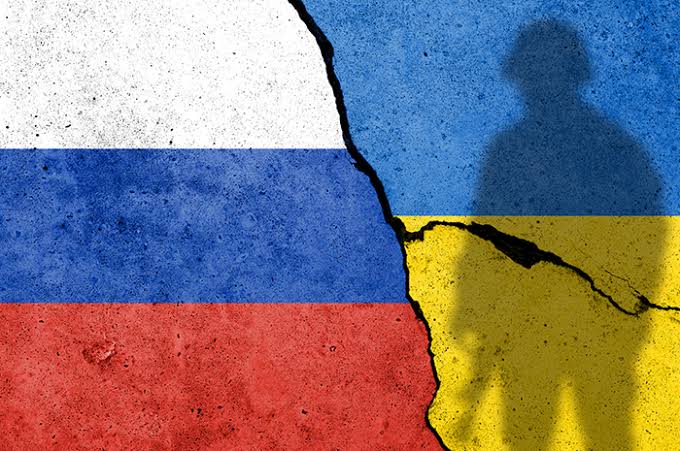
Commentaries on the war in Ukraine have more often been emotional than rational. It is difficult to accept the Russian narratives presenting this “special military operation” as having been justified by Ukrainian and/or NATO aggression, with the aim of “denazifying” Ukraine.
There is no such thing as preventive self-defense under international law, and it was indeed Russia that made the decision to launch a military attack against Ukraine, in violation of the United Nations Charter, of which it is a member of the Security Council, and of the international law it claims to uphold. This war, which Vladimir Putin does not call by its name (and using the term itself can lead to imprisonment in Russia), has been accompanied by numerous war crimes and/or crimes against humanity. Targeting civilians, civilian infrastructure, homes, hospitals, schools, and power plants is strictly prohibited under international law.
Crime did not pay off for Vladimir Putin, even though his objective, which he had achieved up to 2022, was to restore Russia’s status as a great power on the international stage. The war in Ukraine will have weakened Russia. It is less powerful than it was before February 24, 2022, and even if, at the end of this war, it will have effectively expanded its territory, the overall balance will nevertheless be negative. Demographic decline, the exodus of skilled people, a damaged image, economic losses, and the emergence of an anti-Russian Ukrainian national identity, as well as the strengthening of anti-Russian sentiments throughout Western Europe, and Finland and Sweden joining NATO—all of this weighs heavily. History will judge the Putin years harshly because of this war, even though he had previously restored his country’s status to one far greater than its actual weight on the international stage. Admittedly, Donald Trump’s election allows him to contemplate closer relations with the United States and a fracture within the Western world. Nevertheless, the overall balance is negative.
The legal, political, and moral condemnation of the war launched by Russia should not prevent us from examining the causes of the war and the mistakes made by the Western world toward Russia since the end of the Cold War. This war is inexcusable, but it could have been avoided.
The problem is that, in the current debate, pointing out the mistakes that Western countries have made toward Russia is regarded as absolving Moscow of its responsibility for this war.
It must be possible to hold both ideas together: condemnation should not prevent reflection. In any case, such reflection is essential if we want to prepare for the future.
It is difficult to portray Mikhail Gorbachev as being driven by anti-Western sentiments. He had made overcoming the East-West divide the foundation of his policy, and he succeeded in doing so, even though he failed to reform the Soviet Union. Once Westerners had obtained everything they could from him, they abandoned him at the G7 summit in July 1991. We will never know whether perestroika could have been saved. In any case, this led to the failed coup attempt of August 1991, followed by the collapse of the Soviet Union. Zbigniew Brzezinski drew the conclusion: without Ukraine, Russia ceases to be a European empire. The United States concluded that, ultimately, a fragmented empire was certainly preferable to a revitalized and therefore competitive USSR. I heard Mikhail Gorbachev say several times that he regretted that the United States had preferred to be the victors of the Cold War rather than the architects of a renewed world order, which they otherwise proclaimed themselves to be. There was a temptation—and an intoxication—to move toward a unipolar world.
In his January 1992 State of the Union address, George H. W. Bush declared that “by the grace of God, America won the Cold War.” He added: “A world once divided into two armies now recognizes a single and preeminent power: the United States of America.” He regarded this without fear, because “the world trusts us to exercise power, and it is right to do so.”
Russia was therefore not treated as a partner but as the defeated country to which conditions could be dictated. In his memoirs, Alexander Orlov, the former Russian ambassador to France, recounts that the Russian Foreign Ministry received instructions from the U.S. Embassy. When Boris Yeltsin wanted to get rid of his foreign minister, Andrei Kozyrev, he had to retain him at Bill Clinton’s express request.
The invitation to the G7, which became the G8, was more a matter of political soothing than of strategic partnership.
Seeking to justify its continued existence, even though the threat that had led to its creation had disappeared, NATO took on new functions, including expansion into the former Warsaw Pact countries. There were numerous warnings about the dangers of this policy, including from George Kennan, who had devised the policy of containment, Henry Kissinger, and many American strategists. This could only increase Russia’s sense of insecurity. Presenting NATO as a defensive alliance became highly unconvincing in Moscow after the Kosovo War.
Once in power, Vladimir Putin sought to restore Russia’s greatness, but without entering into confrontation with the West. He supported the United States after September 11. He opposed the Iraq War alongside France and Germany.
He became increasingly vigilant about controlling what he considered Russia’s “near abroad,” and he saw the color revolutions as attempts at destabilization covertly orchestrated by Washington. At the Munich Security Conference in 2007, he issued a warning about the hegemonic ambitions of the United States.
At the 2008 NATO summit, the worst possible decision was made: Ukraine was promised the possibility of joining NATO—a red flag for Moscow—without actually being admitted, thereby leaving it without strategic cover or protection. Barack Obama had said he would press the reset button on relations with Russia. Nevertheless, the prospect of further enlargement remained.
Even though Barack Obama had expressed more than doubts about the missile-defense system demanded by the Pentagon, saying that it was based on technology that had yet to be invented, in response to an unproven threat and requiring nonexistent funding, he ultimately accepted it in order not to worsen his relations with the American military-industrial complex. Moscow viewed this program as a challenge to nuclear parity. It had, moreover, led George W. Bush to withdraw from the ABM Treaty, part of the SALT I framework, signed at the height of détente in 1972.
After becoming president, Dmitry Medvedev sought to deepen relations with the West and proposed a conference on security in Europe, a proposal that went unanswered. He abstained on UN Security Council Resolution 1973, which sought to implement the concept of the responsibility to protect the population of Benghazi in Libya. Vladimir Putin, then prime minister, warned him against a Western maneuver intended to deceive Moscow. Dmitry Medvedev maintained his course, still seeking closer relations. This would prove fatal to him. The protection of the population of Benghazi turned into regime change, just as Vladimir Putin had feared. Dmitry Medvedev lost all flexibility.
The proof, Russian Foreign Minister Sergei Lavrov would later tell his French counterpart Laurent Fabius, was: “You screwed us over in Libya; you won’t screw us over in Syria.” Moscow had agreed to play the UN collective-security game in 1990, accepting military measures against its Iraqi ally; it abstained in 2011. Twice, it concluded that it had been betrayed.
Then came Maidan, accompanied by two contradictory narratives: on the Western side, a revolution overthrowing a dictatorship; from Moscow’s perspective, a coup orchestrated by Western powers.
Vladimir Putin has stated that the Russians’ great mistake after the end of the Cold War was to trust the West, and that the great mistake of Western countries was to mistake that trust for weakness.
Today, relations between Western European countries and Moscow are at a level as low as they were at the height of the Cold War. It seems difficult to normalize them as long as Vladimir Putin remains in power.
The future is what matters, and here there are two competing narratives in the Western world. For Northern Europe, Poland, and the Baltic states, things are clear. They warned us: Russia is a threat in itself; we did not listen to them, and our weakness encouraged Vladimir Putin’s ambitions. Lech Wałęsa even declared that as long as Russia is not reduced to a state of 50 million inhabitants, it will remain a permanent threat.
France, Germany, Spain, Italy, and others could respond that these countries had for a very long time opposed any rapprochement with Russia, even going so far as to reject an EU-Russia summit because it would have rewarded Putin in 2021, at a time when Joe Biden was holding a summit with his Russian counterpart.
Western European countries should therefore acknowledge that they may have made mistakes that contributed to Vladimir Putin’s aggressiveness; that this aggressiveness is inexcusable, but that it could have been avoided. They should therefore consider a new policy toward Moscow once Vladimir Putin is no longer in power. It is better to learn from one’s mistakes than to repeat them.
Preface to Alessandro Cassieri’s book, Between Russia and Ukraine: Journal of the Conflict from Its Origins to the Present (RaiLibri), reproduced with the kind permission of the author.