A Prize Established in 1901: Highly Prestigious and Coveted
Established in 1901, the Nobel Peace Prize, according to Alfred Nobel’s handwritten will, which has been on display at the Nobel Prize Museum in Stockholm since 2015, is awarded each year to “the person or community that has contributed most or best to bringing nations closer together, to the abolition or reduction of standing armies, and to the promotion and advancement of peace.”
According to Austrian writer Stefan Zweig, in his memoir The World of Yesterday, Alfred Nobel created the prize to compensate for the harmful consequences of his invention of dynamite, patented in 1866.
Freedom of expression has been among the causes most frequently recognized by the Nobel Peace Prize since the 1970s, as illustrated, for example, by the award given to Soviet dissident Andrei Sakharov in 1975 and to the NGO Amnesty International in 1977.
Thus, men and women who have worked for world peace, campaigned for human rights, or taken action to promote humanitarian assistance and freedom around the world are honored with this prestigious distinction. They are selected by a committee appointed by the Norwegian Parliament.
Over the years, major figures associated with pacifism and humanism have been honored, including Henry Dunant, the founder of the Red Cross, in 1901; Austrian pacifist Bertha von Suttner in 1905; French surgeon and missionary Albert Schweitzer in 1952; Swede Dag Hammarskjöld, Secretary-General of the United Nations, in 1961; American civil rights activist Martin Luther King Jr. in 1964; Mother Teresa, the Albanian-born humanitarian nun, in 1979; and, more recently, Chinese human rights activist Liu Xiaobo in 2010.
Criticism and Controversies
Several criticisms have been directed at the prize. First, for a long time, it was awarded primarily to Westerners and far more often to men than to women. However, with 18 female laureates, the Nobel Peace Prize has the highest number of women recipients among all the Nobel Prizes. These women include Guatemalan Indigenous activist Rigoberta Menchú, who received the prize in 1992 for her efforts to promote “social justice and ethnocultural reconciliation based on respect for the rights of Indigenous peoples.”
There have also been notable omissions that are difficult to justify, such as Mahatma Gandhi. An icon of the peaceful and nonviolent struggle for Indian independence, he never received the prize. However, having been assassinated in 1948, he might have been awarded it had he lived longer.
Above all, several Nobel Peace Prizes have been controversial. In 1906, for example, US President Theodore Roosevelt received the prize in recognition of his efforts to bring an end to the Russo-Japanese War of 1904–1905, despite being a committed militarist and an advocate of the “Big Stick” doctrine, which involves exerting pressure through the threat of military force.
He did not hesitate to criticize his Democratic successor, Woodrow Wilson, for outlining the project of a “League of Nations,” a future instrument of multilateralism and pacifism that foreshadowed the United Nations. Roosevelt did so in his Nobel Prize acceptance speech in 1910. He was, in fact, opposed to multilateralism.
1973: The Kissinger Scandal — The Nobel Peace Prize Awarded to a War Criminal?
In 1973, another American, Secretary of State Henry Kissinger, became a Nobel Peace Prize laureate. This is arguably one of the most shocking and scandalous cases, given his responsibility in Operation Condor, a covert campaign of political assassinations and military coups carried out under the auspices of the CIA in several Latin American countries — notably Chile, Argentina, Bolivia, Paraguay, and Uruguay — during the Cold War, particularly in the 1970s.
Kissinger was one of the principal architects of the September 11, 1973, coup in Chile, which led to the overthrow and death of socialist President Salvador Allende and the subsequent seizure of power by General Pinochet. Pinochet established a bloody far-right dictatorship that lasted until 1990.
Kissinger was also associated with the deadly bombing campaigns in Cambodia during the Vietnam War. His award of the Nobel Peace Prize therefore sparked a major scandal, with some considering him instead a “war criminal” responsible for “crimes against humanity.” Moreover, North Vietnamese diplomat Lê Đức Thọ, who was awarded the prize in the same year for his role as one of the negotiators of the Paris Peace Accords, intended to end the Vietnam War, refused to accept his share of the prize in protest.
In 1991, Burmese stateswoman Aung San Suu Kyi, an advocate of nonviolent opposition to her country’s military dictatorship, became a Nobel Peace Prize laureate. However, later, while serving as de facto head of government from 2016 to 2021, she was criticized by the press for her inaction and failure to condemn the discrimination and massacres committed by the Burmese military against the Rohingya, a persecuted Muslim minority in Myanmar.
These massacres were even described as “genocide” by the United Nations. Calls were subsequently made for her to be stripped of her prize, but the rules governing the Nobel Prizes do not allow for such a measure.
1994: Controversy Surrounding the Choice of Yasser Arafat
In 1994, the Nobel Peace Prize was jointly awarded to two Israeli politicians, Shimon Peres and Yitzhak Rabin, and Palestinian politician Yasser Arafat, founder of the Palestine Liberation Organization (PLO). The award recognized their role in signing the Oslo Accords, an important step toward peace in the Israeli-Palestinian conflict. Several observers criticized the choice of Arafat, regarding him as a terrorist because of the violent actions carried out by the PLO. Kåre Kristiansen, a Norwegian politician and member of the Nobel Committee, resigned in protest.
In 2004, Kenyan activist Wangari Maathai, who has since passed away, became the first African woman to receive the Nobel Peace Prize. However, she was subsequently criticized for her statements about the origins of HIV. She had suggested that the virus might have been artificially created as a biological weapon intended to destroy Black populations, a claim unsupported by any scientific evidence.
2009: Barack Obama — A Nobel Prize for Nothing?
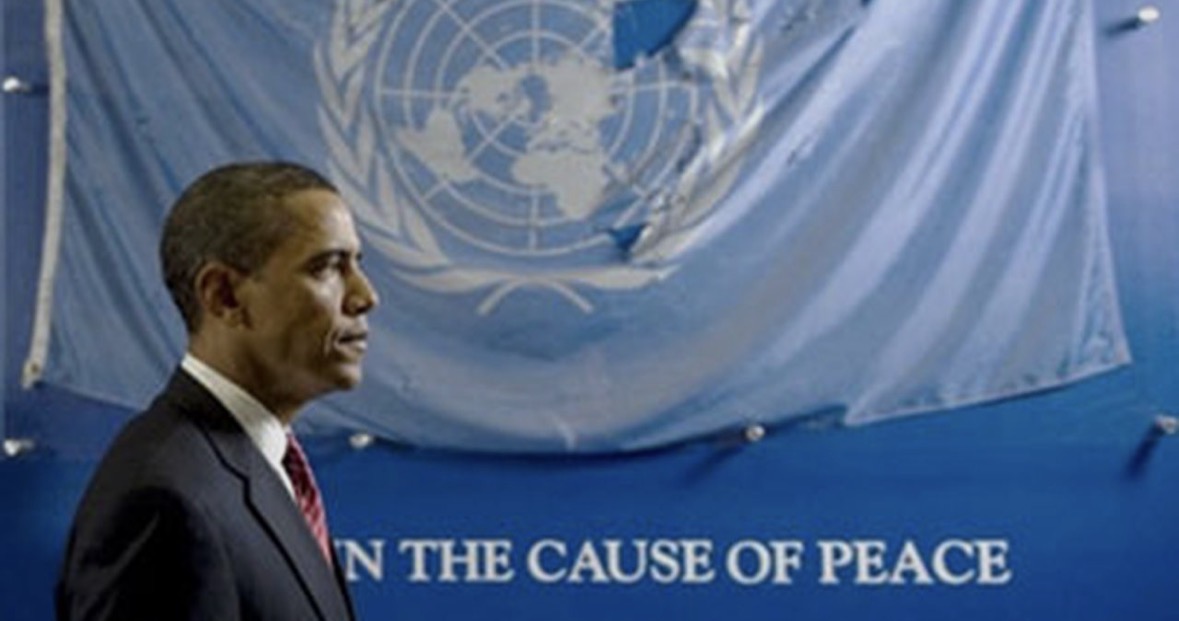
In 2009, Barack Obama was awarded this prestigious distinction. He himself was greatly surprised, as he recounts in the first volume of his autobiography, having been in office for less than a year. At first, he even thought it was a joke. In reality, by choosing to honor Obama, the Nobel Committee intended to recognize “the new climate in international politics” created by his arrival in office, as well as his “vision of a world without nuclear weapons.”
The award prompted criticism because Obama represented the United States, which was then engaged in the wars in Afghanistan and Iraq and continued to operate the Guantánamo detention camp. There, prisoners were tortured and detained without trial or legal representation, under conditions that violated human rights, as numerous NGOs, including Amnesty International, had denounced.
In 2011, the Nobel Peace Prize was awarded to Ellen Johnson Sirleaf, President of Liberia, along with two other individuals. In her country, the distinction divided public opinion.
According to some critics, the award was “unacceptable and undeserved” because the politician had allegedly “committed acts of violence in the country” and had been corrupt, giving her children highly lucrative positions.
Reinforcing these suspicions, the Truth and Reconciliation Commission, which was tasked with investigating Liberia’s civil war, recommended that Ellen Johnson Sirleaf be barred from holding any political office for thirty years because of the allegedly negative role she had played in the conflict.
Finally, in 2019, Ethiopian Prime Minister Abiy Ahmed was also awarded the Nobel Peace Prize in recognition of his efforts to resolve the longstanding border conflict with neighboring Eritrea.
Yet shortly afterward, the international community criticized Abiy Ahmed’s deployment of troops to the Tigray region in northern Ethiopia. The intervention triggered fighting that killed thousands of people and was described by the United Nations as a terrible devastation, accompanied by famine and a catastrophic humanitarian situation for the local population.
In light of all these cases, it is clear that the Nobel Peace Prize has been one of the most controversial distinctions since its establishment in 1901. In this respect, however, it reflects the nature of international relations: every actor on the international stage has multiple dimensions and may have both highly commendable and reprehensible actions to their name.