African Borders : The End of a Taboo

In 1960, with the recovery of independence, Africa inherited an entirely new form of political organisation: the nation-state, defined by fixed, demarcated borders. These borders corresponded to the lines that former colonial powers had drawn to delimit the geographic extent of their presence. Far from reflecting the human realities of the continent, they obeyed an exclusively political logic, shaped by rivalries between neighbouring powers. At the time of independence, the Organisation of African Unity (OAU) recommended the absolute respect of the principle of the intangibility of borders inherited from colonisation. At the time, this was simply prudent. The partition was admittedly far from satisfactory — ethnic groups were divided, culturally and historically antagonistic communities were forced to coexist, and some borders were incoherent to the point of absurdity, such as the Caprivi Strip or the enclave of Cabinda — but everyone could imagine the near-impossible negotiation required to achieve any version of border perfection. Today, this principle appears to have reached its limits. After all, as the man of letters reminds us, “human history is the history of shifting borders.” ...

May 14, 2026 · 9 min · Bruno Clément-Bollée
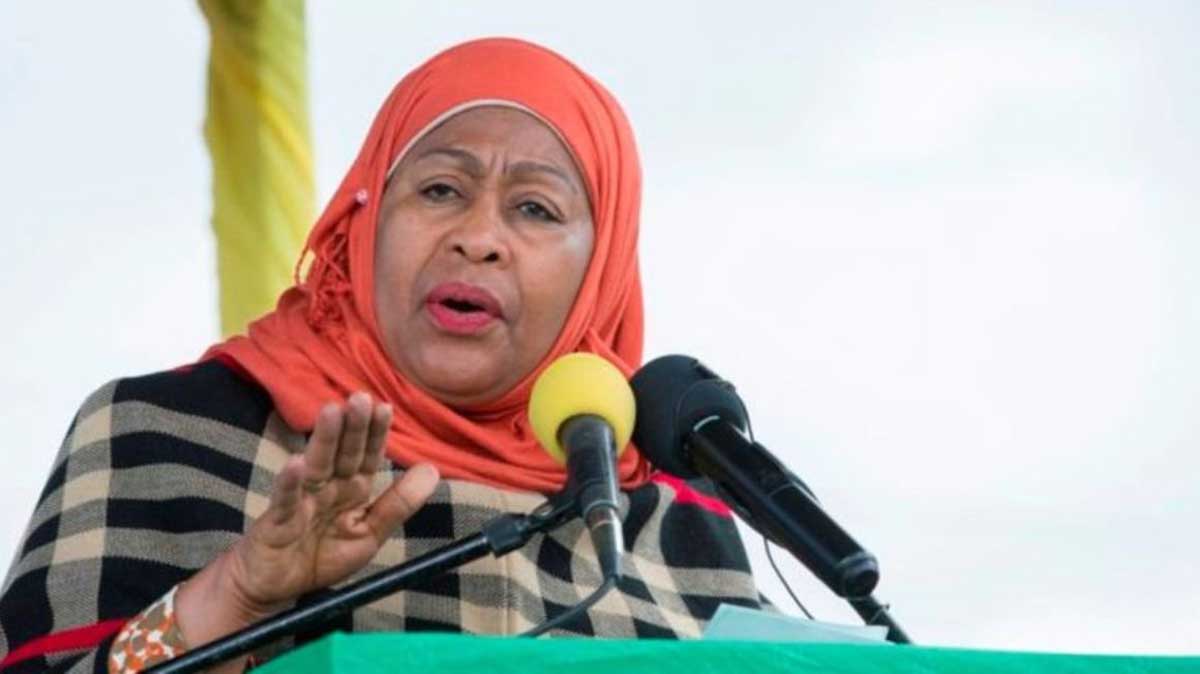
The president of Tanzania, Samia Suluhu Hassan

Gen Z's uprising against Tanzania’s eternal party

Gaia Marchi The elections of 29 October 2025 marked a turning point in Tanzania’s history: the Chama cha Mapinduzi (CCM, the Party of the Revolution) achieved a landslide victory, winning 98% of the vote. President Samia Suluhu Hassan was thus re-elected. A Muslim woman originally from Zanzibar, Hassan had already assumed the presidency following the death of former president John Magufuli during the Covid-19 pandemic, and has now been confirmed by popular vote. The president needed an overwhelming victory to reunify the CCM, within which she did not command unanimous support. ...

April 28, 2026 · 5 min · Gaia Marchi