The Gulf NATO and the Evolution of the Atlantic Pact
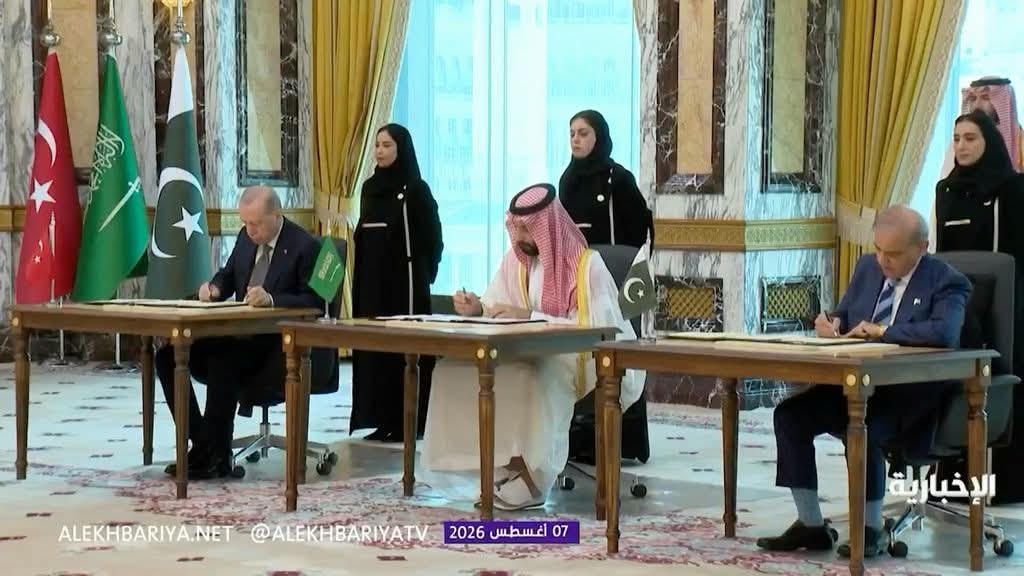
Roberto Bertoni Amid the eventful summer that has just ended, one piece of news went curiously unnoticed, even though it may well be the geopolitical event of the year: the pact signed on 7 August at Mecca between Saudi Arabia, Turkey and Pakistan. The world’s foremost oil and religious power (the location chosen for the meeting was, of course, no accident), NATO’s second-largest military power, and a nuclear-armed state have joined forces, effectively declaring the end of American hegemony over defence and the settlement of international disputes. After all, Trumpism is nothing more than an isolationist doctrine that, over the course of the second term, has turned into a kind of traffic controller devoid of any strategy or, worse still, driven solely by the personal and financial interests of its dominus. What contemporary America lacks is thus not even the will to play a role in the world, but the capacity to do so — caught in a pincer between Bannon’s doctrine, inspired by America First and the paleoconservatism of the 1920s his mentor invokes; Vance’s moderate interventionism, the “hillbilly” turned vice president with plain presidential ambitions; and Rubio’s interventionism — the Cuban-American secretary of state who, of the three, sits closest to the old GOP doctrine of Reagan and the Bushes, now supplanted by the new MAGA line. ...