Where does China stand after twelve years of Xi Jinping’s rule? (I)
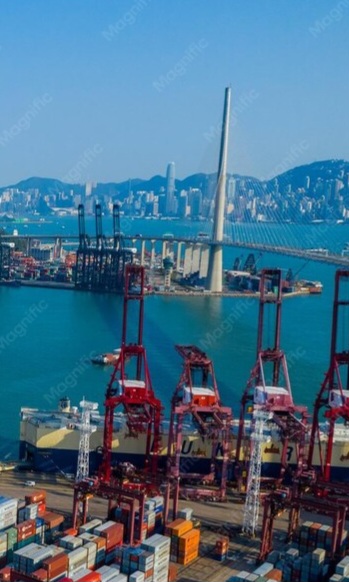
Eric Djabiev Total control over the country Having come to power in 2013, Xi Jinping leads a state that, over thirty years, became the world’s second-largest economic power. The economic successes of the People’s Republic of China date back to 1978, when Deng Xiaoping imposed his programme of economic reform and opening to the world — the “Open Door” policy. Under the Maoist era, the Chinese economy had collapsed under a Stalinist-style, highly authoritarian planning system. Deng is the founding father of China’s new economic power. Under his leadership, over thirty years, China emerged from underdevelopment, driven by 10% growth throughout that period. The growth model has, since 1980, been based on the five Special Economic Zones (SEZs). An SEZ is located on the coast, since it is export-oriented — exports having become the true engine of the Chinese economy. Shenzhen’s is the most significant. The SEZ has a derogatory legal status as a free zone, operating according to free-market rules. Its purpose is to attract foreign investors and to conduct joint ventures with foreign firms. In exchange for very low labour costs, technology transfers are mandatory. These transfers have been essential to China’s climb up the technological and value-added ladder — what is known as “reverse engineering.” ...